Category Archives: Interviews

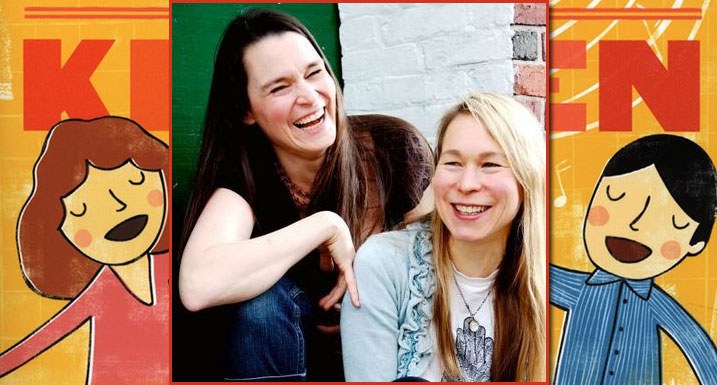
A Conversation with the Nields

For as long as the human race has been able to hear music, we’ve wanted more. And once upon a time, we quenched that thirst by picking up an instrument — or gathering around someone else who had one — and making music happen.

Over time, we learned to develop technology that helped us satisfy our craving — and as more of us learned to use radios, record players, tape decks, CDs, mp3 players, and smartphones, and grew accustomed to a world in which music was never more than an arm’s reach (or the click of a button) away, the further we drifted from that innate urge to create. For a lot of us, music has become something we’re meant to passively consume.

I don’t think it’s supposed to be this way, and neither do a growing number of artists dedicated to reconnecting families with the joy of making music for its own sake, including Nerissa and Katryna Nields. The veteran folk duo recently released All Together Singing in the Kitchen: Creative Ways to Make and Listen to Music as a Family, a book/CD package with something for homestyle musicians of all ages, and they were kind enough to take a few minutes out of their busy promotional schedule to talk to us.

I talk to a lot of artists who express the ideas you’ve written about here. This book seems to be part of a movement.

Nerissa: Yeah. Well, that’s a nice bit of serendipity for us. One of the things we say in the book, and it’s absolutely true, is that it wasn’t until I was a teenager that I heard the recorded versions of a lot of the folk songs I’d grown up with. My dad did have a turntable, and he did play a lot of music, but he was playing what he wanted to hear — ’70s country LPs he’d bought, and occasionally classical music. Mostly, the songs we knew, we knew because he played them on the guitar. That’s how we learned them. That’s how you make a song your own, by passing it down through the oral tradition, rather than making a recording out of it.

I have a lot of respect for recording, too — obviously, we’re recording artists. But in terms of raising kids, I think it’s so wonderful to make a song your own. And that’s kind of what we do in all realms — we’ll take a beloved folk song and change the words, and encourage the kids to make their own versions.

Katryna: Observing art can be a transformative experience, but making art is almost always a transformative experience. And I think people are starting to realize that again.

buy xenical online buy xenical no prescription

I mean, a ukulele…you can pick one up and really know how to play a song in probably three months. That’s an exciting and liberating gift that it seems like people are beginning to rediscover.

I think my favorite story from the book is the one about the woman who inherited a mountain dulcimer and didn’t even think about learning how to play it until a random stranger suggested it — and then watched as music became a huge part of her child’s life.

buy lexapro online buy lexapro no prescription

Nerissa: Isn’t that amazing? I think it’s so inspiring.

It’s inspiring, but it also speaks to this weird disconnect we’ve developed in our relationship with music, where we can have an instrument literally in our hands and not think about playing it. Do you have any thoughts as to how we got to this point?

Katryna: Well, there was a time when the only way you could hear music is if you made it yourself. Even when we were kids, we had a turntable, but even then, it was a little bit of a cumbersome thing to put it on the turntable, get up and change it after 22 minutes or whatever it was, and in our cars, we had AM radio, and that was it. Now, it’s easy to carry a million songs around. You can see someone not wanting to learn how to play an instrument because all you need is an iPod.

Maybe, though, the pendulum is swinging in the other direction. I know that when I go to singalongs now, people often like to have iPads in the room so they can have the lyrics and chords handy.

buy lipitor online buy lipitor no prescription

The marriage of that technology with the simplicity of the guitar is such a cool thing to see.

Nerissa: I do think that our relationship with technology tends to move in a wave pattern. It takes a few leaps forward and we all go whoa, and then we catch up and make it our own, and then it leaps forward again. I think we’re in a catching-up phase right now. I think it would be interesting to chart the ebb and flow of folk music’s popularity against the technological tide — I wonder if one has anything to do with the other.

I often think about an old quote from Pete Seeger where he talked about being ambivalent about making albums, because he was worried that he was sort of tacitly encouraging people to be passive. We take recorded music for granted now, but at the time, it was a real decision for an artist to make, and I think it’s still thought-provoking.

Nerissa: For me, the two things definitely went hand in hand, because I remember being really daunted, as a teenager learning how to play guitar, by the things the Beatles were doing. I think it all depends on the attitude you take, and hopefully, what we’re giving people with this book is a “yes you can” attitude.

I wanted to talk about that message. Reading it reminded me of a time in the ’90s when I was talking to a producer about the way newly affordable recording technology had led to an explosion in self-released albums, and his response was that everyone thinks they have a right to make music, but they’re wrong.

Katryna: Well, that’s just commerce getting in the way.

Nerissa: I wouldn’t even say it’s commerce — I’d say it’s ego. I have a writer friend with whom I had a similar conversation in the early aughts, when self-publishing was starting to take off, and they had the same basic response. But good work rises and falls on its own merits.

Katryna: And also, the idea that every reader and every listener…I mean, is Lou Reed a good singer? I don’t know. But there are people who are moved beyond words by what he does, and how tragic would it have been if he’d decided he couldn’t sing and just not done it? It’s silly to think there’s a good and a bad when it comes to art. Some of the most moving recordings I’ve ever heard have been by complete amateurs.

I think when you invite this kind of stuff — writing, drawing, singing, crafting — into your life, what you’re doing is instilling a love of creativity in your kids. And no matter what their job ends up being, they will have that as part of their vocabulary. This way of not seeing the world as a boxed-in, linear thing, but something full of possibilities.

Nerissa: Right. The benefits of having music in your life are well-documented, but they bear repeating. It really pays dividends in terms of how it shapes the brain, and the heart, and the soul, in ways that are incalculable.

Katryna: I think one of our main theses with this book is the idea that by using music, you’re forging connections with your children that will hopefully remain throughout your family’s life. Some people do it by watching baseball with their kids. For us, it’s been music — that’s been the glue. It’s created pathways for us to communicate, and to remember that we’re from the same world. That we can be helpful to each other.
A Conversation with Dan Zanes

To grown-ups of a certain age, Dan Zanes is best remembered as a member of the late, lamented Del Fuegos, whose ’80s records never found much of a toehold on the charts, but have acquired a fervent cult following in the years since the band’s demise. But to kindie kids and their parents, Zanes is one of the founding fathers of the genre — an artist whose boundless thirst for all forms of musical expression have led him bounding along a beautifully unpredictable path, from folk standards to show tunes, pop to reggae, Spanish to English, and back again.

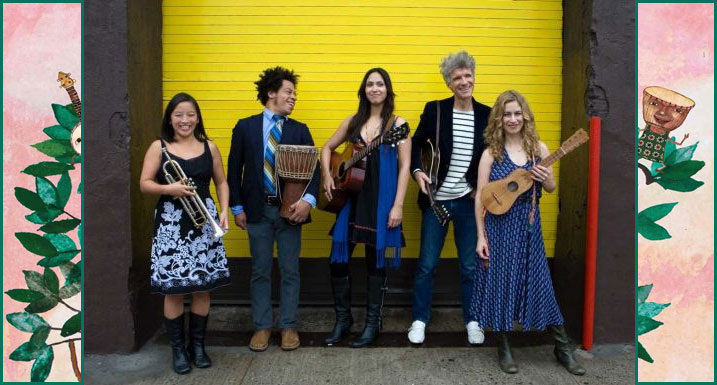
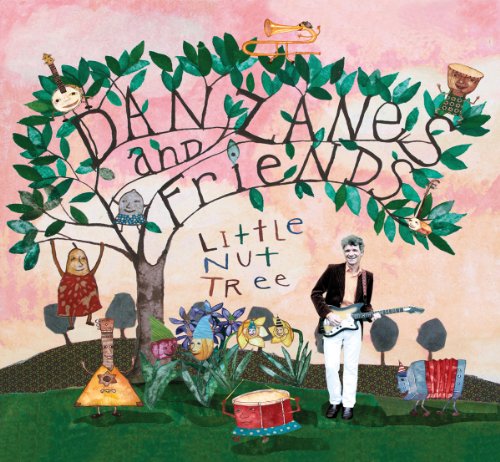
A new Dan Zanes record is always cause for celebration, and his latest family release, Little Nut Tree, is no exception. Along with his regular cast of characters (the “Friends” in “Dan Zanes and Friends“) as well as a small army of special guests, he’s served up a joyous blend of traditional numbers and songs that simply sound like you’ve always known them. Dan was kind enough to take a few minutes out of his schedule to talk about a variety of topics, including past albums, his thoughts on songwriting, and — of course — Little Nut Tree.

This is being billed as your first family album in five years, but you haven’t exactly been away for that long.

Yeah, that may not be the best way of describing it, but we couldn’t come up with anything better. I’d say it’s our first “mixed bag” family record in that period. I’ve released others along the way, albums with themes, but it’s all family music. On the other hand, this one is the most like the music I started making in the beginning — it’s one that I think the most people will be able to kind of rally behind.

I know you do a lot of work around themes. What made you decide not to take that approach this time around?

It just seemed like the right thing to do. I think we were all getting a little burned out on themes around the time of Seventy-Six Trombones. We’d sort of been given the gift of diminishing sales for that series of albums, so that told me it was time to get back. I mean, I think they’re all great records, but…particularly Nueva York!, I mean, that was exactly what I needed to be doing at the time. Maybe following up a Grammy-winning album with one that’s entirely in Spanish isn’t the best idea from a business standpoint, but I really felt totally committed to it, and I wouldn’t have done anything differently, even if it cost us momentum.

It was the right thing at the right time. I felt like the integration discussion was getting so ugly, and it was important to paint a different picture for kids who needed to imagine another kind of world. It felt like it was clearly the right thing to do. Seventy-Six Trombones, I needed to be talked into a little bit, and that probably should have been my sign. It was a really fun project, but the world doesn’t need to hear Broadway songs from me. That isn’t what anybody’s looking for.

It’s interesting to hear you touch on the business side of things. It makes sense, but your image as a family performer is of this happy-go-lucky Pied Piper who just dances along and sort of makes albums without really meaning to.

Yeah. Well, that is sort of true, in a way, but it’s also — particularly in these times, there’s a survival element for artists, and if you can’t make it work from a business standpoint, then there’s no more dancing. I really love making albums, but it’s a very difficult time to be making recorded music in a way that works financially, and I think it’s about to get harder.

Let’s go back in time a little. You started recording — and I started falling in love with music — during the ’80s, a time when it was really hard to make a natural-sounding record. Your band, the Del Fuegos, was essentially a roots rock outfit, but there was still a lot of production on those albums. But when you started releasing family music, you made a point of, in your words, trying to make albums that sounded like people in a room together.

There was this movement in family music at the time where people thought that if they had the production values that were prevalent in mainstream recordings, that was a way to reach a wider audience. I never felt that way — I thought it was the opposite. If the goal is to encourage young people to make music, then…well, you know, for me, I grew up listening to Leadbelly records. It sounded like he was in my kitchen. And if I can picture him in my kitchen, then I can picture myself right there with him. That presence — that feeling of the music being in the place where the people made it — was in the albums. You could feel it.

I feel like the studio is the most abstract sound. You don’t know where the music is coming from when you hear high production values on an album. So we made the records in a house, and we made them to sound like they were in a house. Now, I make them in a room just around the corner from where I’m sitting now, but it’s set up to be essentially the way my living room was, and we all just pile in there together and do it. That sound is really what’s important to me.

On your family albums, you tend to bob and weave a lot between originals and standards. Is it ever daunting at all to blend your own songs in with traditional music that everyone already knows?

Well, the songs that people already know are always so much better than my own. But on the other hand, I feel like I can write songs, and I’d never put one on an album if I wasn’t completely happy with it, and it wasn’t something I totally love. It is a little daunting sometimes, but if I can keep it personal and keep it small, and make it sound interesting in some way, I feel like I’m keeping things on track. We go through a lot of songs to get to the five or six originals that make it on these albums.

What’s your journey through the American songbook like at this point? Are you still discovering standards that are new to you?

I think the thing now is really…I hope to do some recordings with Elizabeth Mitchell and her family, and when that happens, we’ll probably lean heavily on old time music. But for me right now, the thing I really want to understand is — America is changing so fast, and there are so many people here from other parts of the world, that the old Anglo-American tradition just isn’t who we are anymore. So for me, what I’m trying to do more and more is understand the music of everyone that’s here. The Great American Songbook has to be in ten different languages now, for starters.

A lot of times, teachers don’t necessarily have the resources to find the songs that are relevant to address the traditions of their students. We’re lightly chipping away at it, and there’s obviously work to be done in this area outside my own records. I think a lot of young people don’t necessarily feel welcome, or they might even be ashamed of their culture, because it isn’t the accepted norm. In music, I feel like we have the possibility for a greater spirit of inclusion, so I’m trying to help. It’s a start, but it’s something, and we always learn a lot.

You’re touching on something I wanted to ask you about, which is your long-standing affinity for music from other parts of the world. Knowing that you’re essentially playing to kids whose parents’ first contact with world music was Paul Simon’s Graceland album, do you feel a responsibility to educate your listeners about other cultures?

Really, I’m just a curious musician. I love to find out what’s happening, and now, at this point, it’s less “world music” than it is “music of the U.S.A.” The only responsibility I feel is as a white person who’s sort of examining, from the inside, the way white culture has been a steamroller — so dominant, for so long, and it’s made it difficult for other cultures to be heard. I want to gain a deeper understanding of that, and try to talk to other white people about taking a look at it. We’re not representing the world we live in, and it’s important to adjust that. The other stuff, the music, is the fun stuff. Learning the songs that people around me are playing — that’s just something I love to do.

You’ve found a pretty seamless way of expressing those ideals in your own music. Little Nut Tree, in particular, is a really enjoyable album.

Well, it is a party. I love playing with all these incredible people around me — and our guests, people like Sharon Jones and Andrew Bird. They’re incredible. Everyone is so soulful and deep, and it’s wonderful to have them all come together.

The last thing I want to ask you about is how much you practice now. I’m always interested to hear about this, because each musician’s approach to their craft is so different.

I went through a period recently where all of a sudden I went to a show and started playing guitar, and my fingers were really soft. I don’t know what I’d been doing with my time, but I hadn’t been practicing, so lately, I’ve been playing for hours a day. I think I’m going to stay on this track, because it’s great — I love it. I just picked up an electric guitar in the thrift shop around the corner, and I’ve been playing it constantly.

I moved recently. For about three years I’ve been stoopless, but the new place has a front stoop, and so I’m finally in a place where I can sit out front and play while watching people go by. I’m also going to be scoring a Buster Keaton movie, Steamboat Bill, Jr., in January, so if I stay on my practice trail now, I’ll be in good shape for that.

Enhanced by Zemanta

A Conversation with Ashley Albert of The Jimmies

It’s been a long four years since the Jimmies treated us to their last release, the CD/DVD extravaganza Make Your Own Someday, but the wait for new tunes ends today with the debut of their new album, Practically Ridiculous.

For fans of the band, Practically Ridiculous offers more of what you love: eclectic, full-bodied arrangements, quirky lyrics, and the reliably adorable vocals of Ms. Jimmy herself, singer Ashley Albert. Ashley was kind enough to take a few minutes out of her day to discuss songwriting, the ins and outs of being a kindie performer, and what the heck took so long between albums. Read on!

So what’s cookin’?

You have a new record coming out.

I do! Have you heard it?

I have. And my daughter, who is five, already knows the words to “Bonfire.”

Really? You know, someone else told me the same thing, and I was a little worried that “Bonfire,” of all the songs, was going to be sort of the least popular. That one is really special to me.

I’m guessing you thought the underlying message of the lyrics might go over some heads.

Yeah.

And the first time I listened to it, I thought the same thing — and so did my wife — but our daughter just latched onto it, and she keyed right in on those lines about being strong, and about being yourself, and about loving who you are.

I love that. That’s definitely the most meaningful song on the album for me, and I wrote it as a message for kids — I didn’t sit down to write an adult contemporary ballad. I just didn’t know if kids would be receptive of the message or not, so that makes me really happy. Continue reading →