Category Archives: Featured

A conversation with Jiro Yamaguchi of OzoKidz

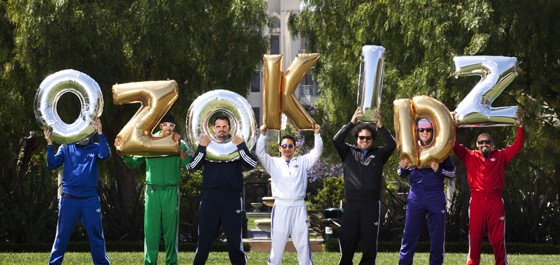
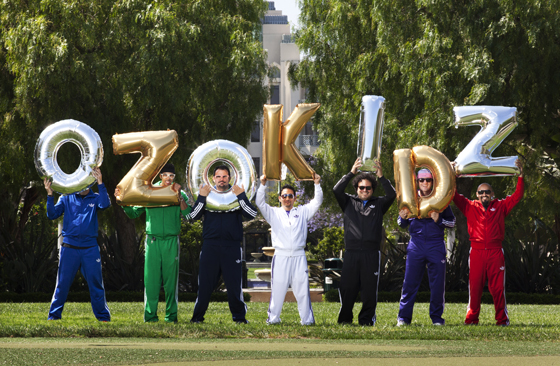
After 15 years of enjoying a devoted following, Ozomatli knew it was time for a change when they couldn’t give away tickets to some of their fans. But they could to their kids.

On September 25th, the Grammy-winning band will release its first full length kids album, OzoKidz. This follows a few years of dabbling in side projects such as recording for PBS Kids and the Happy Feet II soundtrack.

I spoke with Ozomatli percussionist Jiro Yamaguchi about his kids musical inspiration, the similarities between playing for kids and adults, and why it’s necessary for them to diversify their sound.

Why a kids album? Why now?

We decided to start doing kids shows at first because we realized that a lot of our fans were having kids. We would do a show on a Wednesday night, and normally in the past we could pack a house. Four years ago and were noticing that people weren’t coming. We put a message out there on Facebook to have an unlimited guest list, and we got responses that we’d get was “We can’t, we have kids.” So a light bulb went off, we were getting older and our fans were too. They were having kids and needed sitters. We just started adapting our old music for children. That’s kind of how it started. And then coincidentally we got these recording gigs for PBS Kids were they wanted us to do 30 second bumper music with a theme — one was on opposable thumbs, one were for mesasurement. Several of those. They made videos with them. And then we had the opportunity to do the entire music for the Happy Feet II video game. They approached us and gave us a list of 30 different songs, everything from “Funkytown” to Harry Belafonte. We went into the studio and did it and it was great. It kind of developed our chops for recording kids music. It was really freeing and it was a lot of fun. So the next steop was to make our own record.

Before you dove head first into Ozokids, did you realize there was sort of a independent cool kids music scene?

I have a duaghter who is 4 now, so I’ve been aware of it, but even before that I had heard of people like Dan Zanes and They Might Be Giants. I became more aware of it once I had my own daughter. I think we’re going to fit right in with that team and offer something a little bit different as well.

Who are some of the artists you looked towards for inspiration?

They Might Be Giants stuff was really inspiring to me. I could listen to it myself and enjoy it as well as my daughter, and that kind of helped me. There was other kids music, and I would say, really, do we have to listen to this? It was not relatable to me. I was like, Oh we need to make music that transcends age — from something really young to adults can listen to. I think our music does anyway. Even if we’re not doing kids music per say, I think it’s broad appeal.

What was the music/band/artist that inspired you to pick up an instrument as a child? Is that your hope with this record, inspiring children to pick up instruments?

I listened to a lot of different stuff from classic rock to punk to jazz. Some of the jazz I listened to as a teenager was mind opening and broadening. It’s kind of like an education without going to school. Later percusionist Zakir Hussain and Prithiraj Chowdhury inspired me to go back to school and study Indian drumming and world music drumming and percussion. I don’t know if our intention was necessarily to get kids to pick up an instrument, but if that’s something that inspires someone picks up, that a great bonus. There are some kids who always come to our Los Angeles shows with Brazilian hand percussion, using the same model that we use and have an Ozo logo on it. It’s kind of cool to see children pick up those things. They are looking at us and saying, let me try that. If that can lead something — music or not — that’s great.

Is there a formula or process to take your sound and make it for kids?

We have a little more freedom when making for kids. There’s a certain amount of freedom to do songs we wouldn’t with Ozomatli. It’s more of a fun element.

Was the song writing process the same, but just with lyrics for kids?

The process is pretty similar. Everyone brings in their own subject matter and ideas. It’s a pretty easy process in terms of what we want to do. That’s a really great place to be when you’re creating in the studio.

You’re back in the studio recording an adult record. Has it been difficult to change the writing process?

Not at all! We’re in pre-production for an Ozomatli record, and I think it actually helps the creative process because our juices are flowing. When you get back in the studio, it’s not hard to switch gears at all, and if anything it helps to keep grease the wheels.

Do you play songs for your kids first to get approval?

We don’t do it to get approval, and most of the songs we haven’t played live yet. A few of the cuts on the album — like “Sun And Moon” and “Piraña” — we were playing before we were recording. I think we work backwards that way. We make them first, then see what works live. The ones that don’t work as much live fall back, and the ones that do rise to the top. This goes for our Ozomatli records too.

Was there a thought of expanding the 4 60-second songs from PBS kids into full songs?

Those were kind of appetizers and one-offs, but we have played some of them live. We could work them into our live set.

Do you find those songs get more recognition?

It’s hard to tell because we’re such a high-energy band and we just want kids to do something on each song to get moving, so I’m not sure if there is a recognition factor.

Little bit different than an adult crowd, then.

Totally different. Well, but now that I say that, maybe it’s different in that the attention spans are a little bit shorter, but what I did notice is, you know what, this is just little people. But they react in the same way that adults do. Underneath it all it’s all the same thing.

Seem to wrote songs from an educational perspective rather then from the eyes of a child, was that done on purpose?

I think that partly came from the PBS kind of thinking. I think that came fromthe process of writing a song on a theme. We just wanted a balance, we wanted songs that are.

The record industry so much different and less stable than it was when you started, was that a motivating factor in this new evolution? 

I think it’s kind of necessary. The more diverse in what we can do, the better it is for our band. Having a whole branch of Ozo kids being a completely seperate entity would be a great thing for us. The more things that we have as a band, the better. Whether that’s making music for movies, commercials, movies, while playing kids shows, all those things combined are good for us and the longevity of our band in the way the music business is right now. We’ve been a band for 18 years, and I think part of that is the reason to adapt and not rely on the industry. When we first started, we recorded on tape and pro-tools were just coming out, there wasn’t anything like a 360 deal, Tower Records was still in business, and we’ve seen a lot of changes. Our ability to diversify and do other things has helped us survive, and we’ll keep doing that.

Listen and download the track ‘Trees’ for free! (only until 9/3)

You can now preorder the album at Itunes or Amazon.

Stay-at-Home Dad? No Thanks

I have been unemployed since September 23rd, 2011.

buy lasix online buy lasix no prescription

I had a great 14-year run with a local media company here in Milwaukee, but even working in the online world didn’t save me from evaporating newspaper revenue.

I spent the first nine years in radio, then spent the last five in the online world. To spare you the details, I was a jack of all trades. I produced, read the news and sold for the radio station. In the online world I wrote, ran a website, project managed, and taught social media — plus shot/edited/produced video, among a million other things. I figured employers would drool at my versatility and hire me in an instant.

285 days have passed and I am still unemployed.

One fascinating development of this whole ordeal has been a rekindled passion for running.

buy avanafil online buy avanafil no prescription

 I have run every single day since I was let go. I needed something that would help re-affirm — to myself and to potential employers — that I could be determined, dedicated and driven. Losing my job was a punch to the gut; I knew it was coming, but it was still a shot to the ego. How have the past nine months been?

buy xifaxan online buy xifaxan no prescription

In a word, frustrating. But at the same time, eye-opening — just not in the way I had imagined.

You’ve heard the story plenty of times: Guy gets downsized and decides he wants to start his company and work from home. In the back of my mind, I had thought and hoped I would become that guy. I thought I would have been able to generate enough freelance work and be able to just work from home the for the rest of my life. I mean, that’s a dream for a lot of people, right? Who wouldn’t love to be their own boss and not have to commute every day? Lots of people.

But here’s what I learned: I don’t want to be a stay-at-home dad.

It’s not that I think that I’m not capable of doing it. If I had more economic freedom to spend 2-3 years making this a go, I would give it shot. But now is not the time. And here’s another thing: I want to get back to Corporate America. No, really — I do. I like putting on a shirt and tie. I like interacting with co-workers, even the ones that drive me crazy. That social interaction with live human beings is something I miss more than I ever thought I would.

It’s one thing to talk and interact with people via Twitter, Facebook or even the phone. At my old job, there was a steady balance of human interaction, in addition to social media interaction. But after nine months of social media conversations and limited human interaction, I know I want to get back to an office.

Summer Reading Recommendations from the Deedle Deedle Dees

Last week, we noticed a tweet from Lloyd Miller of the Deedle Deedle Dees saying he was compiling his list of summer reading recommendations. Naturally, we thought Dadnabbit would be the perfect place to run Lloyd’s list, and boy, were we right — what follows is a collection of wonderfully thought-provoking books that will enrich your summer and expand your (and your family’s) horizons. Summer is generally known as the season of literary junk food, and that’s fine if you’re into that sort of thing…but if you’re looking to really delve into some books this summer, start here. (And all book titles are linked to their Amazon pages, just in case you feel like ordering them RIGHT NOW.)


As the leader of the Deedle Deedle Dees, a band that devotes most of our family shows and albums to songs drawn from history and science, I feel compelled constantly to suggest books. Songs, the way I write them, can only give a taste of the great, complicated stories that inspired them and so a lot of extra exploration on the listener’s part is required if she or he truly is interested in grappling with things like the philosophy of nonviolence as articulated by Gandhi (check out our song “Ah Ahimsa”), racism (Our song “Bring ‘Em In” narrates a famous anecdote about Negro League Star Satchel Paige’s response to a slur), or neurology (The crude and gory early days of this field of the study are the basis for “Phineas Gage Has Something to Tell These People”).

The summer reading list I’m going to give you here has books for your kids to read by themselves, books you might want to read with your kids, and books for you to read on your own. Most of them are related to my musical projects for kids and adults in some way. These aren’t books that you or your kids should read if you’re trying to be up on current trends in literature or prepare for the next year in school. These are just some books that I think are worth some of your time.

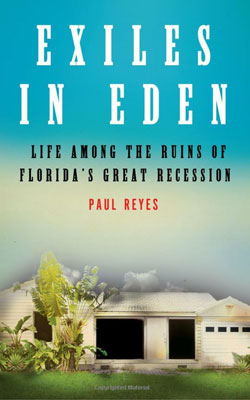
Exiles in Eden

Exiles in Eden by Paul Reyes

I’ve recommended this book many times on my blog and elsewhere, but I bring it up again because now I’m writing a musical movie based on it with my friend Roy Nathanson. In September, he and the Jazz Passengers — with me playing a small guest vocalist role — will debut some songs from the project at the Stone, a club in Manhattan for which John Zorn serves as artistic director. Then, if we can raise the money, we’re actually going to make the movie and shop it around.

I’m currently re-reading this book as I work on the script and am again incredibly moved by it — and upset that more people haven’t read it. Exiles tells the story of the housing collapse in Florida with Paul’s family story as its through line. It’s easiest to say it’s literary nonfiction in the John McPhee mold but that doesn’t give you a real sense of just how mighty this book is. It almost reads like one long prose poem, one that clarifies the confusing mortgage crisis for people (like myself) who are in need of a remedial economics class, but simultaneously waxes large and profound on the ephemeral nature of human effort and our place in the ever-powerful and changing natural world.


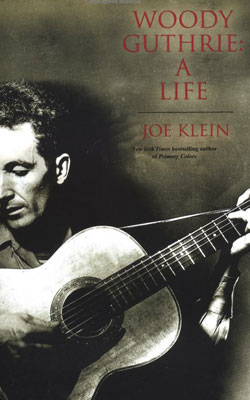
Woody Guthrie: A Life by Joe Klein

This is the book Springsteen mentions on the live album before he plays “This Land is Your Land.” And this is the author who also gave us Primary Colors (a book I enjoyed at the time). It really is the best one-volume treatment of an icon whose life was long and full of contradictions. Necessary reading, I think, if you want to know more about the man who wrote all those songs you’ll hear on Keep Hoping Machine Running, the new digital Woody tribute album featuring the Dees and many other artists.


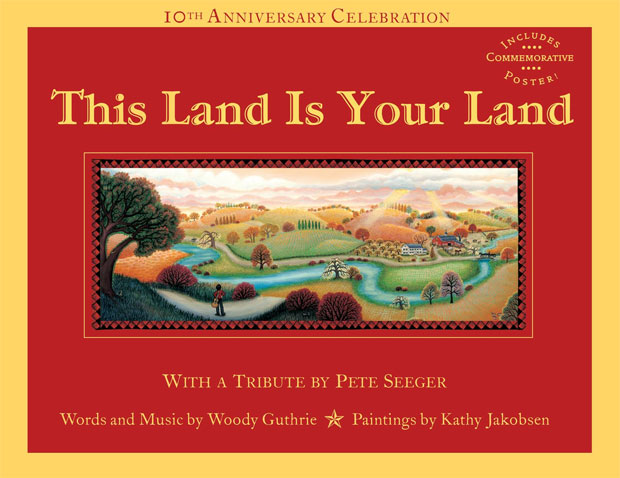
This Land is Your Land by Woody Guthrie, illustrated by Kathy Jakobsen

The complete original lyrics of the tune (including my favorite “no trespassing” verse) paired with cool paintings that depict the world Woody wandered in the 20s and 30s.


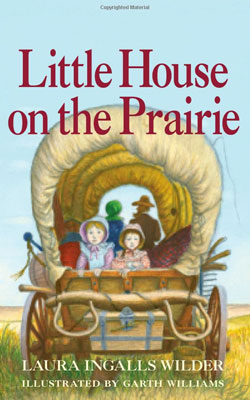
Little House series by Laura Ingalls Wilder

My family is slowly making our way through the Little House books, a series I never appreciated as a child but have really grown to admire as an adult. As a boy, I only wanted books about war and sports so a tale of frontier life focused primarily on girls was something I just dismissed without even trying to give it a fair read.

Now that I’m the father of a little girl who’s obsessed with how things work — and a little boy who’s obsessed with anything that hints at being dangerous — I find these stories to be among the few pieces of literature that everyone in my family actually enjoys. My wife read and loved them as a kid and is excited to read them again. I’m getting into all the minute descriptions of hog slaughtering, cheese making, and other farm tasks — they’re fascinating in and of themselves, but they’re also giving me ideas for another project in its very beginning stages: a collection of songs about work that may become a Dees album, themed show, or some multi-media hybrid.


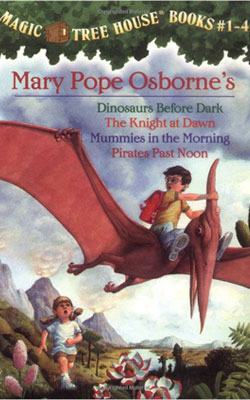
Magic Tree House series by Mary Pope Osborne

Mary Pope Osborne’s historical fiction has been just as important for fueling my kids’ interest in stories from the past as Laura Ingalls Wilder’s memoirs, but the two series couldn’t possibly be more different. The Magic Tree House books have simple fantasy-mystery narratives adorned with the historical types of which kids never seem to tire: mummies, knights, Vikings, ninjas, etc. I was initially skeptical of these books and only brought them into their house as audiobooks to help my kids — who always seem to get a powerful second wind at bedtime — relax and fall asleep. Now, after these books have prompted not a few historical fact-finding missions for our family, I consider myself a big fan.


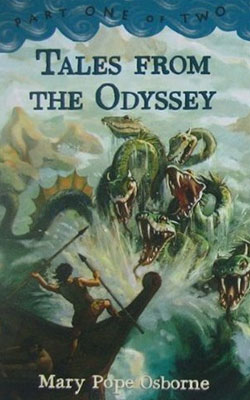
Tales from the Odyssey by Mary Pope Osborne

Myths have taken a prominent position in our household discussions after my wife and I created an original musical of the Aeneid with her second-grade class. Mary Pope Osborne retells Homer’s epic in a simple chapter book format. Right now we’re working on Book Three: Sirens and Sea Monsters.


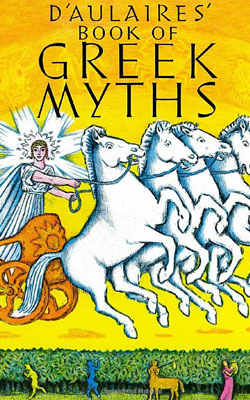
D’Aulaires’ Book of Greek Myths by Ingri d’Aulaire and Edgar Parin d’Aulaire

Although the language may seem archaic to kids used to the conversational style of many new books , this is still the best version of the Greek myths for young readers. Plus, it’s got those awesome pictures (my son can’t get over the picture of Cronus with the babies in his belly) that many parents still remember in great detail from their own childhoods.


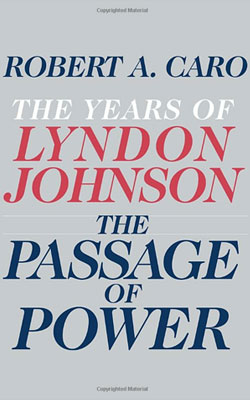
The Years of Lyndon Johnson by Robert Caro

I came late to this series. It’s been on my to-read list for many years but it wasn’t until I read the excerpt from the fourth book, The Passage of Power, in the New Yorker, an account of JFK”s assassination focused on LBJ’s experiences of the event, that I felt an intense need to read all the books immediately. I bought volumes 1-3 a couple of months ago and, after devoting a good amount of my life to Mr. Caro’s prose, am cruising through volume 3 (I’m going to pick it back up right after I finish writing this). These books live up to all the hype and then some.


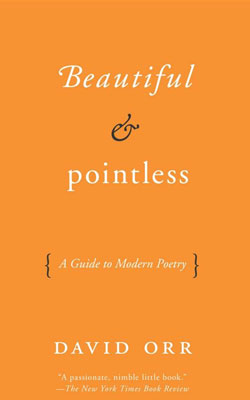
Beautiful & Pointless: A Guide to Modern Poetry by David Orr

David, the poetry critic for the New York Times, is collaborating with me and Roy on another project that will debut at the Stone in September: a set of music and poetry and musings on both. We invited David to join us after reading his fantastic book on what poetry is and isn’t. The books is also about how poetry — an art form that many view as intimidating, confusing, and best left to high school English classes — can become part of one’s life as a reader and human being in simple and powerful ways.


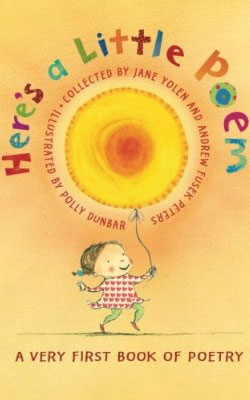
Here’s a Little Poem: A Very First Book of Poetry, edited by Jane Yolen and Andrew Fusek Peters, illustrated by Polly Dunbar

Speaking of poetry, the last book I’d like to recommend your family check out this summer is this wonderful anthology our school librarians gave my daughter as a gift a few years ago. I’m not a big fan of “children’s poetry” in general so I was pleasantly surprised by this gathering of newer and classic verses curated by Jane Yolen and Andrew Fusek Peters that includes people who write specifically for children as well as people — like Gertrude Stein and Langston Hughes — who don’t.