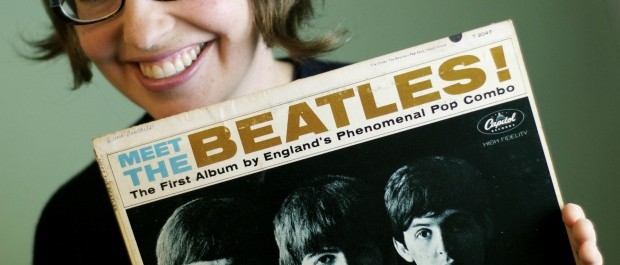
One night, when I was seven years old, my father blasted Meet the Beatles! from his stereo. I think it was some kind of mistake. Maybe he thought he had his fancy, chunky headphones plugged in. We were in bed and it was LOUD. And irresistible. “I want to hold your ha-a-a-a-and!” I ran to the living room, unknowingly joining that classic mob. Yet another girl completely, almost tearfully, enthralled by the early Beatles.
My father did woodworking as a hobby and had built himself a little corner of shelves to house his stereo equipment and records. Receivers glowed with backlit needles dancing in VU meters, and the whole thing looked downright scientific. I knew that records were to be handled reverently by the edges, and, furthermore, that the little, lesser, player in my room was deemed not fit for my parents’ collection. How was I going to get my hands on this record and play it to my heart’s content?
One Saturday morning a few months later, my neighbors had a garage sale and I wandered curiously over with a little change in my pocket. There, in a box of records inexplicably separated from their jackets (who were these barbarians living next door?), I found their copy of Meet the Beatles! Twenty-five cents later, it was mine.
I took that record home and, in the privacy of my room, I could play it over and over. It was terribly scratched, but I could deal with that. To this day, I expect those songs to skip the way I listened to them hundreds of times. “All My Loving.” “Hold Me Tight.” “It Won’t Be Long.” It was the Beatles as America first knew them — all pop perfection, yet raw and rollicking too. It was adult love but fun and vague, and I spent many hours staring at their faces on my parents’ copy, reading the liner notes and listening along to my own scratchy record.
My parents’ Beatles selection bookended the band: they had Meet the Beatles! and Abbey Road. The summer I turned ten, having started guitar lessons, I bought myself a book of Beatles songs with easy chords. I became a one-girl Beatles cover band (again, in the privacy of my room), picking out the melodies of so many unfamiliar-to-me Beatles songs and doing my best to sing them. There I was, guessing at French for “Michelle” or puzzling through the delivery of the verses on “Give Peace a Chance.” A little bittersweet? As the years went by, I would be fascinated each time I finally heard the real recording of one of these songs and got to see how close or far off I had been. Still, that book got me started on something that would become a core part of my identity. I was someone who liked to sing and play.
My parents’ copy of Meet The Beatles! now hangs in a record frame on my own living room wall. It was never really theirs to begin with. My aunt’s name is written in careful cursive in the top left corner. A few years ago at a rare family reunion, I mentioned the record to the original owner, thinking she might like to hear how much it had meant to me. Her face lit up and she looked over at my other aunt. Suddenly they were telling me about how they had watched the Beatles on Ed Sullivan. How they had taken pictures of the television screen with their camera in excitement. And how they had snuck out of the house that night and walked to the record store to buy that album. It’s kind of a magical record that way.
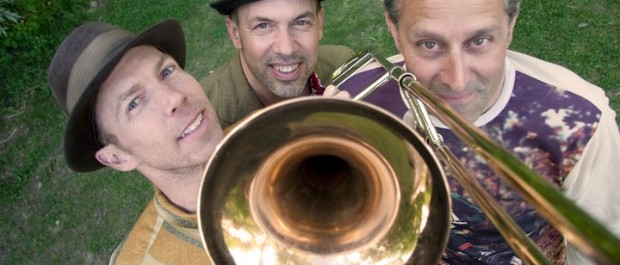
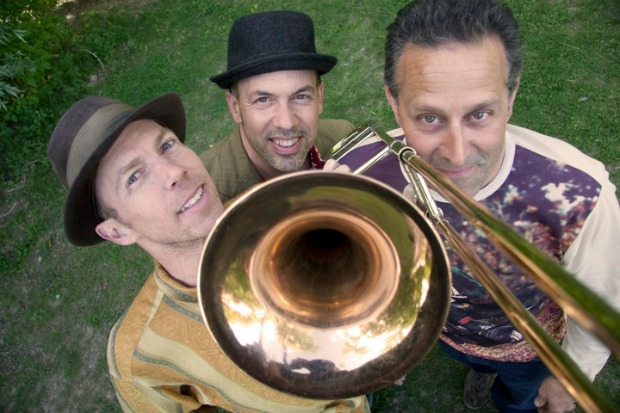
If you had to go away for awhile and you could only take five of your favorite albums with you, which ones would you choose? Yes, we know it isn’t a fair question, but that hasn’t stopped us from asking music fans who happen to be recording artists in their own right. This edition of Desert Island Discs comes courtesy of Recess Monkey, whose latest LP, In Tents!, is out now. You can preview a video from the album below — after reading their Desert Island picks, of course!
Drew:
Jellyfish, Spilt Milk
Just two records from this amazing Bay Area band. I feel robbed. This collection encapsulates so many different influences and emotions. Like many records, this one is the soundtrack for a certain point in my life. There are layers upon layers, melodically and lyrically. I could listen to “Russian Hill” on repeat forever. Never thought I’d fall so hard for a harmonica solo.
XTC, Skylarking
I was first introduced to XTC by a cassette tape my brother got from a friend. It was a copy of Skylarking. This friend had even reproduced the album art on loose leaf binder paper and cut it to size to fit in the plastic tray. From the opening notes of “Summer’s Cauldron” I was hooked. I wish I could crawl inside this record and live there.
And I might just sneak Pet Sounds and Kid A in my pack back while no one is looking. And I could probably fit Summerteeth in my toiletries bag — can I bring one of those?
Daron:
Pixies, Surfer Rosa/Come On Pilgrim
This is one of my favorite albums from one of my favorite bands — a UK release of the Pixies’ first LP and EP combined. You feel like you’re in the studio with the band…full of energy and saucy banter.
Sigur Ros, Ágætis Byrjun
When I first got this album I listened to it for about a week straight. It is so full of textures and layers that I’m still discovering nuances. Sigur Ros continues to create amazing soundscapes, but I’ll never forget the first time I heard them.
Jack:
Elliott Smith, Figure 8
It’s really a toss-up between Figure 8 and xo, but Eliott Smith is definitely at the top of my desert island list. Where to begin? I think he had an exceptional ear for harmony, and I love how he reinforced melodies with several instruments playing in unison. The guy was a downright prodigy — he played nearly all of the instruments on his albums — and manages to channel the Beatles without simply emulating them. He even recorded a lot of his later work at Abbey Road! He had some real problems in his non-musical life, but musically speaking he’s the musician I most wish I were.
John Vanderslice, Pixel Revolt
It’s no secret to Recess Monkey devotees that we¹re die-hard John Vanderslice fans. He manages to keep cranking out amazing albums that represent real growth each time — what an inspiration to see another artist who never stops growing! Pixel Revolt isn’t his newest album, but it’s the one that sticks with me the most — such a unique blend of acoustic guitar, synth pop and manufactured beats. To top it off, he’s a really nice guy AND runs a great all-analog studio in SF. We keep talking about how we can figure out a way to record there.
A Tribe Called Quest, The Low End Theory
Jazz rap. Such a great album — this is one of the ones that instantly transports me back in time, but it is still remarkably fresh to my ears. I remember seeing the video for “Scenario” on MTV for the first time thinking “what IS this!?” It totally changed hip hop for me. Q-Tip is such a powerful MC! This is my favorite hip hop album of all time.
Steely Dan, Gaucho
This is another real toss-up. I LOVE Steely Dan, and each of their records has a special place in my brain. One would definitely be on the list, and this minute it’d be Gaucho. The utter smoothness of “Babylon Sisters” is what’s ringing in my ears as I type this… But if I think about it too long, I’ll probably change my mind to Can’t Buy a Thrill, and then Aja… It never ends. Such an impressive body of work!
The music of Dean Jones and Dog on Fleas has been a constant presence at Dadnabbit HQ ever since my daughter (who’s currently a proud six and a half) was very small. As you’re no doubt aware if you’ve read the site for any length of time, I’m a big fan — not only of Dean and the Fleas’ songs, but their warm, quirky production aesthetic, a style that lets the music breathe while making room for all kinds of unexpected stuff.
Dog on Fleas’ new LP, Invisible Friends, includes everything I’ve come to expect from Dean and the band — exotic instruments, lyrics that are laugh-out-loud funny one moment and heartbreakingly tender the next, instantly hummable hooks, rock-solid arrangements with deceptive depth — while demonstrating that they’re still growing as songwriters and recording artists. Basically what I’m saying is that Invisible Friends is their best record yet, but don’t take my word for it; enjoy some of the videos embedded in our chat below.
Between your solo career and all the music you help create for other artists, I feel like you’re probably writing constantly. What’s the writing process like for Dog on Fleas? Is it more democratic, or is everyone off starting songs on their own before they bring them to the group?
I guess it’s mostly me writing stuff. I’m trying to get [bassist/guitarist/singer] John Hughes to write more. [Laughs] He’ll bring in something great and then say it isn’t quite done. We work on stuff a lot.
What about you as a writer? Are you the type of guy who punches in every morning, or do you just wait for inspiration to strike?
Here’s my philosophy: I’m kind of all or nothing. The window is either open or closed. For instance, when Invisible Friends was done, I had no time to write, because I was working on everything else — so to get that window open again, it takes a little bit of work. And then once it’s open again, I’m writing three or four songs a day. I actually carry a little recorder around with me at all times, just in case I stumble over a little idea, and then I don’t listen to it for months.
I feel like this kind of thing is probably common for a lot of artists. You have to write a lot of crappy songs to write a good one, you know? I’ll write songs I don’t even think are really all that good, just to exercise my songwriting muscle.
I’m always curious about the answer to that question, because I’ve known artists who don’t write unless they’re working on an album, and I’ve known others who treat songwriting like a day-to-day job.
Yeah, I hear artists like…you know, John Hiatt. I hear him on the radio, and I’m like, man, that guy gets up at 9 o’clock, he has a cup of tea, and he has a song written by 10. Cut it out, man — I’m so sick of him. And there are a lot of people like that, who seem like they just write a song at a certain time of day, and it doesn’t seem like anything to me. Just pumping it out — Hiatt can write a song in 10 minutes. You can tell they were written during “songwriting time.” I feel like my best songs come when I’m in the car or on a bicycle, and I have to pull over to grab them.
I feel like a lot of the best creativity happens almost by accident, and usually while your brain is occupied doing something else.
Right. Yeah, for me, it’s the bike. It’ll hit me in a field or something. I’m serious — I just drove to a gig the other day, and I wrote four songs on the way to the gig. One came and I was like, “Hey, that’s amazing! I just wrote a song!” Ten minutes later, another one popped up. I don’t know how they are yet, but… [Laughs]
You’re probably at an advantage in the kindiesphere, because a lot of artists have to take day jobs that don’t have anything to do with music…
Yeah.
Whereas running No Parking Studio allows you to marinate in other artists’ music a lot. I feel like that has to have a profound effect on your creative process.
I love it. Even if I’m working with a song I don’t love, I’m going to be able to bring my creativity to it. If the artist gives me a little bit of leeway with it, I’ll take it. And in the kindie world, there are a lot of people seeking me out as a producer, which is really cool. I actually have to worry about whether the Dog on Fleas record is going to cut into the Okee Dokee Brothers album, you know?
How do you think your production career has impacted Dog on Fleas as a band? I’m sure it’s had an effect on scheduling, but I’m also interested in hearing how working with other musicians has helped color you as an artist.
I don’t know. I’ve been doing other records for people for awhile. Invisible Friendsdefinitely would have been finished sooner if I hadn’t been working on other people’s records, but I think we’re probably the same. I’ll tell you, the Okee Dokee Brothers were really interested in pre-production, and I appreciate that, although I’m not sure we’ve really gotten into it with the Fleas. I mean, it’s my studio, so we can just spend the night and record a song, and if it doesn’t work, we can throw it out and start again.
I really love the job you did on that Okee Dokees record. The production is pretty involved, but you won’t notice unless you’re really paying attention. It breathes.
I don’t owe the musicians anything. It’s the song, you know? I remember reading something about how Tom Waits talks to his songs. He’ll be sitting in the corner, asking them what they want him to do. I love that — you can go in so many directions, and that was the case with the Okee Dokee Brothers. They’d hear something and say it was cool, but they knew there was something else that was still waiting to be done.
What’s the tracking process like for Dog on Fleas? Your sound is very live, but I know plenty of overdubs are involved.
We have our routine. We’re always in the room together. There are overdubs and stuff, but if I’m playing guitar, it’s guitar-bass-drums, and we’re all in a room. Maybe the amplifier is upstairs, so there isn’t any bleed. On the new record, the vocals were redone for most songs, but there are a few that were live. We’re definitely always playing three instruments live and overdubbing the rest.
So start to finish, how long did it take to record Invisible Friends?
That’s a tough question. It was actually a different album at one point — like three years ago. The songs wanted to live together, you know? It took on a different quality at some point and shifted the songs in a new direction.
It takes a certain amount of bravery to listen to that — to lose those other songs along the way.
It’s hard to throw out a song. I’m arguing with the guys in the band, and arguing with myself — but ultimately, every song on this record is talking about a little world. Little people. Even the ones that don’t really relate can still live in the same little room.
A lot of family entertainers struggle to strike a balance between “kid-friendly” and “stupid.” You guys manage to consistently stay on the right side of that line.
Wait until you hear the next one! [Laughter]
Let me put it a different way — you guys don’t write songs about learning the alphabet or washing your hands.
No, I know. And I know people are trying — or they come up with a song title, and that becomes an idea. If you ever think something is a good idea for a song, it should not be written. [Laughs] I’ve probably ignored that advice. But people come up to me all the time and say, “I had this idea for a song,” and I tell them, “It won’t be any good.”
So then how do you come up with a song like, for instance, “Fortunate Mistake”?
Actually, I had a band a long time ago called the Falling Wallendas. We had a song called “Fortunate Mistake” with this whole mythology — we were really into performance art, with a tap dancer and this little old lady who made our clothes. I don’t remember how that song went, but I’ve always really liked the idea of fortunate mistakes. I’ve written like 10 songs with the same title, I just like it so much.
I love the message behind that song, but what I love even more is that it isn’t overt. I think a lot of your songs trust people to hear what they need to hear, instead of beating them over the head with a message. That’s a pitfall that a lot of kindie artists find it hard to avoid.
Yeah, right. I love someone like Robyn Hitchcock — maybe he’s saying nothing, but I always feel like there’s some thing. I understand. I might not be able to put it into words, but that’s what I prefer — that feeling where you feel like you understand the song, even if you can’t put it into words.
If it works, it works. I was just thinking about this, and I think I have a typical type of song that I write, but I think there’s only maybe one of them on Invisible Friends.
What do you think makes a typical song for you?
Oh, I don’t know. It’s like Fred Eaglesmith — he grew up in the town next to me in Canada. He’s great, but he can write the same song over and over again, he’s so freakin’ smart and he’s such a great word guy. Anyway, I remember this story about him losing a book of songs at the airport or something, and his manager was freaking out, and he just shrugged — “I’ll just write more songs.” [Laughs] I can’t think of what my typical song is, but I’ll start to write one and feel like it’s something I’ve done before. A few words, a little melody, eh. There has to be something that sparks something in someone other than me.
I like that your songs demonstrate a willingness to be strange, or even a little dark.
I like that. And I think kids like it too — they’re into that, and they always have been. I can recall hearing the Beatles — they had stuff that left me wondering, as well as some fairly grotesque lyrics. It was appealing. I won’t go into the problems of the kindie world, but…get a little weird, man, you know? Kids can take it.
How did you develop your fondness for such an eclectic array of instruments? The credits on the booklets for the albums you’re involved in are always pretty entertaining. Did I hear a baritone guitar solo on “Smelt,” off Invisible Friends?
No, that’s just a regular guitar — it’s just the E string. That’s my style. One string is enough for me. [Laughs] I’ve always just been fascinated by instruments, and I’ve played in a lot of improvisational settings. Up this way, there was a school — the Creative Music Foundation is near here, which was founded by a guy named Karl Berger. Ornette Coleman, Don Cherry, all these guys were up here. There was a whole school up here in the ’70s, and people were coming up to really explore world music. You think about all the “out” jazz guys, and they were probably up here, along with musicians from all over the world. That bleeds into the Fleas.
I wonder if that makes it harder to create arrangements — the presence of so many other colors on your musical palette.
No, because they just call out if they’re needed. I feel like I don’t — I’m conscious of not reaching for that stuff too much. But I can go there. [Laughs] Daniel Littleton was just over here, and we were talking about this homemade instrument that I asked a guy to build, which is a West African two-string fiddle. Daniel and I get along like that — talking about something that sounds like, you know, an ngoni. I don’t know how many people do that.
And you’re already working on your next solo release, right?
Yeah, actually, we had another Dog on Fleas CD planned — we were going to do a Tin Pan Alley record, and we had the songs picked out and everything. That’s a fascination of all of ours. We’ve played some of the tracks live. But I think we’re going to write our own, because you have to pay for them unless they’re in the public domain, and that’s just more paperwork for me. I think we’ll cover a couple of public domain songs and write a bunch of our own.
But yeah, we were all set to go and then I pulled the plug because of all that, and started writing more — and now there’s going to be a solo record and a Dog on Fleas record. The solo record is going t0 be — the first song is called “Absurd.” I think that’ll be the album title. And it’s interesting, because one day after I decided to hold off on the Fleas, I went out in the back yard with an acoustic guitar and wrote a song and I thought, “This is what the solo album is going to be like.” And then I wrote another one, totally opposite. The new one is synthesizers and drum machines. So much for the folk thing. [Laughs]