DVD Review: Marvel DVD Comic Book Collection: “X-Men” Volumes 1 & 2

In the early 1990s, when Marvel’s X-Men comics were at the peak of their popularity, Marvel Entertainment finally produced an animated series based on their wildly successful mutant superheroes. Cartoons, in general, were gong through a renaissance. Steven Spielberg attached his name to Tiny Toons, attempting to recapture the lunacy of the old Warner Brothers shorts, while Bruce Timm and Paul Dini were taking on the Batman legacy with their classic Batman: The Animated Series. Marvel’s X-Men may never have been on the same level artistically as those two shows, but it was influential in its storytelling and the way it managed to incorporate the nearly 30 year legacy of the X-Men comic books into a single series. Moreover, despite the clunky animation and some questionable voice over casting, X-Men is solid, fun entertainment for kids and adults alike, with themes of tolerance, loyalty and family that don’t get to preachy.

Buena Vista Home Entertainment has just released what they dubbed the Marvel Comic Book Collection. X-men Volume 1 and Volume 2 each have 2 discs each and contain the first 33 episodes in order from seasons 1 and 2 and the first 7 episodes from season 3.

When creating this particular series, it was apparent that the producers had a specific approach: Keep the X-Men team simple, with no more than 8 characters. That may seem like a lot, but considering that there are too many X-Men related characters in the Marvel Universe to count, this was a wise decision. They opted with the popular characters of the time: Cyclops, the pensive leader who shoots optic rays out of his eyes; Jean Grey, a beautiful and powerful telekinetic; Wolverine, (the most popular character then and now), a savage with claws in his hands; Gambit, a reformed Cajun thief with the ability to manipulate kinetic energy; Rogue, a southern misfit who is seemingly indestructible and can absorb other peoples’ powers; Beast, a brilliant scientist trapped in a furry blue body; Storm, a stunning weather goddess from Africa; and Jubilee, a teenage girl just learning to use her mutant ability. With a smaller group it allowed the viewer to get attached to the characters on an emotional level. Continue reading
CD Review: “Robert Bobbert & the Bubble Machine”

Robert Bobbert & the Bubble Machine – Robert Bobbert & the Bubble Machine (2009, Little Monster)
purchase this album (Amazon)

There’s a track on the Lonely Island’s Incredibad called “Shrooms” that consists of a guy repeatedly screaming “I’m on shrooms!” over what sounds like a backing track made entirely of eight-bit synths, and while I hasten to point out that there’s no direct correlation between the two, every time I listen to Robert Bobbert & the Bubble Machine, I can’t help hearing “Shrooms” in my head when it’s over. Robert Bobbert — the kids’ rock alter ego of the Apples in Stereo’s Robert Schneider — doesn’t get high at any point during this album, but its blend of chunky, analog-sounding synths and bright, bouncy vocals is cut from similar musical cloth.

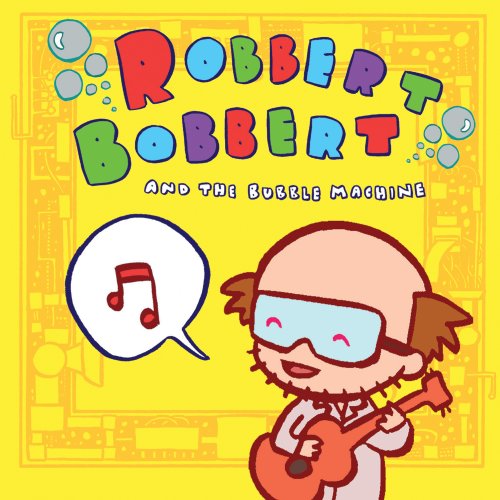
Of course, this is probably not the sort of comparison Schneider was hoping for — and actually, Robert Bobbert & the Bubble Machine takes some pretty obvious cues from more kid-friendly sources, such as the Beach Boys, Barnes & Barnes, and They Might Be Giants. It’s an album as brightly colored as its artwork — which, as you can see, is pretty darn bright.

Things start off with “I Am a Clock,” a wonderfully bouncy introduction filled with ticks, tocks, dings, and dongs — get your mind out of the gutter — that sets the Day-Glo tone for the rest of the record. Schneider keeps things moving with “We R Super Heroes,” all buzzy synths, cartoony vocals, and beautiful harmonies, and “Hey Little Puppy,” an uptempo tip of the hat to early Beach Boys with some cool surf guitar that gets in and out under two minutes. In fact, the album doesn’t hit its first bum note until its fourth track, “Fee Fi Fo, Fee Fi Fum,” an annoyingly cute kiddie rap number that sounds like something Dr. Demento might play on an off night.

Fortunately, things get back on track quickly: “Gravity” is a fun two-minute pop song about physics, “Little Duck” combines another perky arrangement with layered vocals and cool synths, and “Boom Boom” is a TMBG-style instrumental; the toy stomp of “Mighty Mighty Elephant” and the slightly punky “Laughing” (both under two minutes in length) are also a lot of fun. “I Love the Animals” is rather grating, but “A Tiny Sheep” closes out the album with a sweet, slightly wobbly lullaby.

As you may have noticed, many of The Bubble Machine‘s tracks are pretty short — the longest one clocks in at 2:35, and quite a few of them are less than two minutes, with the shortest one only a minute and 13 secconds long. For grown-up pop fans, that kind of brevity smacks of laziness, but for younger ears, it’s pretty perfect; rather than trying to make kids’ music that parents will enjoy, Schneider builds this album around what his target audience will enjoy, and makes only slight concessions for older listeners. Don’t buy it if you’re looking for something you can rock in the van while the little ones are at school, but for a brief, fun interlude the whole family can enjoy together, you could certainly do much worse than Robert Bobbert & the Bubble Machine

.

Reblog this post [with Zemanta]

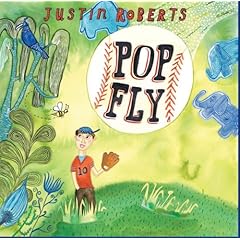
CD Review: Justin Roberts, “Pop Fly”

Justin Roberts – Pop Fly (2008, Carpet Square)
purchase this album (Amazon)

I listen to a lot of it now, obviously, but I’ve never been all that proactive about finding new kids’ music — partly because I’ve been lucky enough to have a steady stream of the stuff sent here for work, and partly because I’ve always made a conscious effort to feed my children a varied musical diet. My daughter loves Danielle Sansone as much as she loves Springsteen, and the only time I feel a panicky need to find something new for her to love is when she asks to listen to the mix CD of songs by the cursed Raffi that a family “friend” sent us, which is part of why I’m only just now hearing Pop Fly, the latest release from Justin Roberts — oh, and why I’m just now hearing Justin Roberts for the first time, too.

If you aren’t a kids’ music aficionado, me losing my Justin Roberts virginity may not seem like a big deal, but if you’re among the truly hip breeders, you know how embarrassing it is for a kids’ music critic to be unfamiliar with a giant of the genre like Roberts, who has been earning raves since releasing his first album, Great Big Sun, in 1998. Having now heard Pop Fly three or four dozen times, I understand why; it’s become the biggest cliche in all of children’s music to say an album is as much fun for the parents as it is for the kids, but Roberts actually manages to pull it off here. No, seriously, you guys — where the most successful kids’ recording artists generally tend to have a gift for writing songs that look at life through a child’s eyes, Justin Roberts is instead a brilliant pop songwriter who just happens to make music that’s appropriate for a younger audience.

Pop Fly is full of wonderful little gems, from the opening title track (about daydreaming in the outfield, natch) on through the heartbreakingly beautiful closer, “Fruit Jar,” which catalogs all of a father’s most important wishes for a child, and hits nary a false note in between. The arrangements are instantly accessible enough for little ears, but smart enough for discerning music lovers, and the production is full of nifty pop touches, like the tasty brass in the title track and “Backyard Super Kid,” or the subtle synths in “She’s a Yellow Reflector” and “Stay-At-Home Dad,” or the Beach Boys-inspired backing vocals in “Kickboard, Baby, Yeah,” or…well, you get the idea. Lyrically, it’s all very sweet stuff, delivered with Roberts’ endearingly square vocals, but none of it feels sugary — even when he’s singing about sisterly love (“She’s a Yellow Reflector”) or looking up to a dad (“Stay-At-Home Dad”) and grandmother (“From Scratch”), the songs come across as heartfelt rather than saccharine, which is a crucial distinction, especially if you make a habit of letting your kids take over the stereo.

In short, I love this album. In fact, I love it so much that Pop Fly ended up on my iPod, not just my daughter’s. I could go on, but that probably says it all, doesn’t it?

Reblog this post [with Zemanta]