Category Archives: Interviews

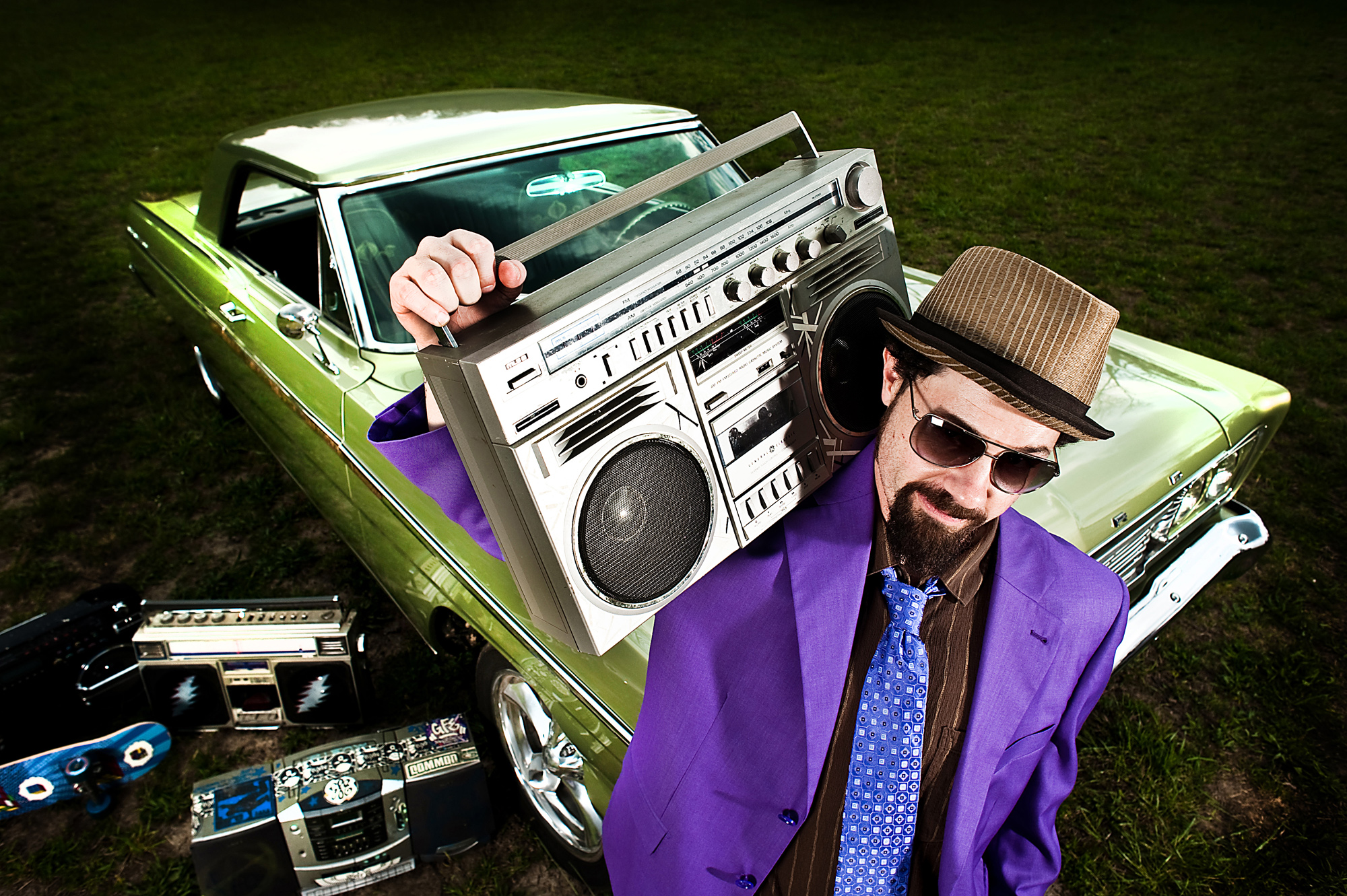
A Conversation with Secret Agent 23 Skidoo

The undisputed King of Kid-Hop is back with arguably his strongest album to date: Make Believers is a genre-bending retro radio party.

I talked to Mr. Skidoo while getting his hair cut prior to a CD release show in Ashville, NC this past Sunday. We chatted about going the Kickstarter route, swearing, why teenagers scare him, and pondered one of life’s most interesting questions: “Is it still called skinny dipping if you’re fat?”

Can Make Believers make believers out of the non-believers?

I think so. I think I’ve finally reached the perfect formula — there is a balance between hip-hop and other genres that I deal with on this record. R&B, funk, swing, punk rock, salsa and dancehall, instead of just hip hop beats played with a sample on top. I’ve found a way to incorporate the actual rhythms, the post-production feel and all that into each song so it’s a hybrid — and musically, it’s more sophisticated and unique than what I’ve done. Lyrically, I’m kind of pulling like a Harry Potter-type behavior with this, and I’m kind of letting my albums grow up right along with my daughter. The ones I have to work hardest turning into believers are the people who even wonder why kids’ music exists in the first place. I think this album is both sophisticated and specific enough for families that it justifies itself instantly.

I sense a very retro vibe on the album. Not just an old school hip-hop vibe, but a ’50-’60s vibe. The chorus on “Hi-5 for the Hi-Dive” would sound perfect on Dr. Demento’s radio show.

Totally. The only complaint I’ve heard about the record is that it is too old school. And honestly, I took it as a compliment.

You write a lot of the lyrics with your daughter in mind. What will happen when she gets too old for the kids’ stuff?

Good God, I have no idea. (Laughs) Teenagers scare the hell out of me. I have thought a lot about it, and I know I can’t make a plan for it until it happens. What I will say about her is this: Luckily, she’s both pretty grown up in the sense that she can go on tour with us and she’s really sophisticated about things, reads at a high level.  But she’s not in too much of a hurry to grow up and become a teenager. She’s 10 now and a lot of her friends are trying hard to be a teenager, but she’s not really like that. I’ll play it as it comes. She still has innocence to her and a novel way of looking at things. It’s that innocence and novelty that’s part of being a kid. She just may keep that and keep inspiring in that sense. I think some of the songs are specifically about being a kid — “Hi-5 for the Hi-Dive” being one, or maybe “Back Home.” I think I’m surrounded by enough kids to keep me inspired. I’ve thought about making music for teenagers, but I think the last thing teenagers want to do is listen to “music for teenagers.”

Well, you do bill Monkeywrench on your website as “For teens & grown ups!”

Actually Monkeywrench will get a proper release and push this year. I wanted to wait and make sure we did it correctly. We made a really high quality video for “The Zombie Song,” but it’s gruesome and includes eating guts, so it’s probably not best to be sharing that with the kids.

Do you help your daugher, AKA MC Fireworks, with her lyrics at all?

It depends on the song. We pretty much decided that for most of the Skidoo material, its ghostwritten by me. As she put it, it’s a character that listeners are used to and it would be best to keep it that way.  But you know, Bill Childs has the Science Fair record coming out later this summer and she has her first solo song on it. She did the hook, she did the lyrics, and she did the melody since she’s taking piano lessons.  I may have helped out, but it was 90 percent her. She has a collaborative recital in a couple days and maybe one day we’ll work together on an album. So I ghostwrite most of the lyrics, but most of the time it starts with an idea from her. For example, “Space Cadet” started after I picked her up from school one day and she asked, “Is it still called skinny dipping if you’re fat?” and I was like, “Aaaah, that’s a song!”

The first two Secret Agent 23 Skidoo albums were released through a record label. Talk about doing an album supported via a Kickstarter campaign.

The Kickstarter campaign was really great for many reasons. For one, I didn’t really have to worry about the budget during the recording process. Having that extra money allowed for time that would allow me to maybe experiment with an idea that I was working on. I think they really helped with the sounds on the new record being what it is. As an artist, it’s great to know that people are anxious and waiting for new material from you. As I was writing the record I had already gotten the Kickstarter money, so it was nice making a record for an audience I knew was already there.

I count 39 guest musicians on the CD liner notes . Isn’t that a bit excessive?

Early on, I started working with bands and I found that working with a band, you make better music and it helps you stand apart from everybody else. I don’t think of myself as just a family musician, but as a musician. I’m trying to push the envelope and expand the market, not just for family music, but the hip-hop market. I know not a great deal of the hip-hop market pay attention to me, but people hit me up with kids who have heard my stuff and people who don’t have kids are hitting me up, because they understand what I’m trying to accomplish. It’s not as if I think the bar is lower is because it’s family music. The short answer is, I do it because I think it is what sounds the best and that’s what can make the song in my head come to life. It helps there are a ton of great musicians here in Asheville.

What makes Asheville so special?

Asheville is a real bohemian type of city. It’s cheap enough to live here and people can try and live out their dreams. A lot of friends have left for NYC, but the cost of living there has prevented them from doing it. Down here It’s  the South, but it’s probably too expensive for the rural South, it’s cheap enough people can have a house or an apartment and still have time to pursue their career as an artist. The quality of culture you get here is still top notch. It’s not as diverse as I would like to see it, but beyond that the restaurants are phenomenal, the music is phenomenal, the bars are phenomenal.

The Big Ol’ Nasty Getdown is  a project that you’re featured on with Gift of Gab. How did that come about?

I’ve had some contact with P-Funk from my days with my first band, GFE — Granola Funk Express. We played together for about 10 years. In those times, our road manager had been the road manager for P-Funk back in the day. That’s how I was able to get some of P-Funk to play on Monkeywrench. But for this project the connection wasn’t from that contact, but from Yo Mama’s Big Fat Booty Band who have played a ton on my records. They have a lot of contact with P-Funk, and they’re kind of carrying the torch in a sense — it’s a big crazy funk band live show that talks wild space stuff. So they called me and asked if I wanted to be a part of this project and a remix of a P-funk song.  I did three verses on it and made the beat. Then they called me back and said, “Do you mind if we replace your second verse with Gift of Gab?” and I was like, “Hell no I don’t mind! But in return, I need his contact number.” And that’s how Gift of Gab ended up on Underground Playground and the Monkeywrench album. That was a fun project to do. I have a lot of respect for P-Funk and a lot of respect for Gift of Gab. Being on a song with both of them is amazing.

I had never heard you drop a swear word before, but you drop ‘shit’ on the The Big Ol’ Nasty Getdown. Was it hard to turn the adult switch back on again?

You know, I’m not sure how many fans in the kids’ music scene this answer is going to get me: I don’t believe a lot of words that are considered bad words are actually bad words. I believe racial slurs are bad. I believe the word “hate” is bad. I believe it’s the energy behind the word you’re saying that means something. For example, if I were to say Bob Marley was positive as shit, I don’t see how that can been seen as a bad thing. If I tell you, “I hate Jews” — that is a horrible thing. The reason I don’t swear on the kids’ albums is because I’m respecting parents who feel that same way about their children. And obviously, I wouldn’t sell many records. In my personal life, I don’t have a problem with a lot of those words. I’d prefer to use some expletives sometimes. It’d be more fun.

On the first Skidoo record you wrote “Gotta Be Me” and on Make Believers you wrote “Gotta Be You.” So which one is it, me or you?

(Laughs) I gotta say, at some point when I was on stage explaining to the audience exactly what they had say during “you gotta be me,” the irony quickly came apparent. “Gotta Be You” is the shortened version of the hook “your best friend has gotta be you.” Whereas “Gotta Be Me” is about individuality, “Gotta Be You” is about being your own best friend. They’re both rooted in the social interaction kids have, but watching my kid grow up, I could see a little deeper into what actually happens. Yes, you have to be yourself, but you have to believe in yourself in order to make that work. You have to be your first believer. You have to respect yourself first.

Outside of more money for artists, what would you like to see from the family music industry?

I would like to see the media treat it as the phenomenon that it is — not just New York and a few scattered cities across the country. This is something legitimate you can take your families to. Just like when you were in your 20s going to shows, seeing bands on the cutting edge, now you can do the same thing with your families. There is no reason artists like myself shouldn’t be able to book a week’s worth of shows. There is no reason parents can’t take their kids to a family concert at 5 PM on a Tuesday, the same way they take their kid to a movie. I’d like to see the touring circuit expand. I’d like to see the national consciousness of it expand, so people know it’s a much more fun, unique and rewarding experience that you can take your kid to compared to a movie.
A Conversation with Lucky Diaz

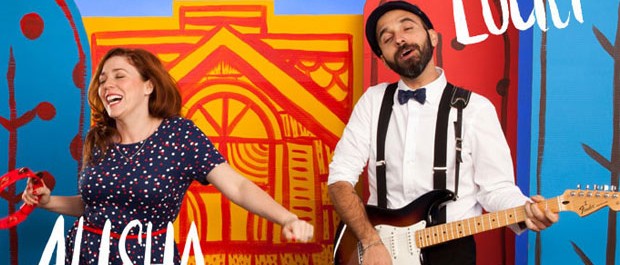
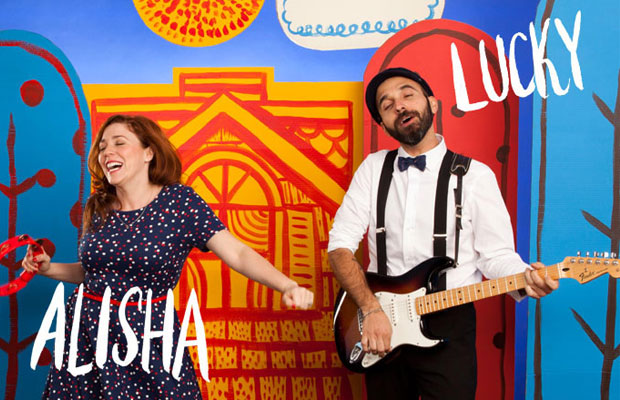
Lucky Diaz just finished one heck of a week. Not only did he release a new album, A Potluck, with his Family Jam Band, but he also married bandmate Alisha Gaddis. Despite all those things on his plate, he took time out to chat with me about getting married, releasing the new record, his daughter Ella and why he is willing to give away his albums to teachers.

Did you plan on getting married & releasing a record in the same week on purpose?

(Laughs) No. The rule that Alisha laid out was, finish the record before we got married. The record has been finished for about two months now. So I took care of that part. We always release albums in the spring and we just happened to be getting married in the spring. In hindsight, maybe not. I’m excited to be doing both, but it’s been fun.

According to Facebook, last week your then-fiancé Alisha made apple pie for the first time. After tasting it, any regrets on this whole marriage thing?

I have a thing about pie. Pie is my favorite food. However, I’m diabetic so it’s not very often I get to eat pie. She had this idea for making a pie and she’d be the first to tell you that she’s not very domestic. She doesn’t cook very often. So she has this ambition to become a great cook. As for the pie? It was delicious. But regardless of the pie, I was going to marry her. I’m the winner here.

How did the two of you meet and become bandmates?

Here’s how it really got started. I have a daughter, Ella, who is eight, and I started playing songs for her at bathtime. I really wanted to her to get acquainted with the music I grew up on like the Beatles, Buddy Holly, and the Beach Boys. At some point I started just making up songs for her and she really liked them. Then I played songs for her friends and they really liked them. Alisha and I were dating at the time and she said “You should record these.” I was already doing sessions for other people, so I decided to go ahead and record it. I just really loved the idea of having a family jam band. Alisha is such a good entertainer. It made sense to do it together. We’re the real traveling family band. Ella travels with us and it’s a really fun experience to do as a family. It wasn’t intentional, but I can’t do it without her now.

What were you doing prior to children’s music?

I was just writing all the time, sometimes for different musicians, et cetera. But there’s something special about children’s music. I think there’s something unique about parents and children listening to music together, and I feel nowadays that just doesn’t happen. Growing up for me it was listening to the Beatles, America, the Doobie Brothers or the Who. My musical education really started with AM radio and to me, that was family music. Today, I’m not sure that it is.

Back then it, music was universal. Everything is so targeted now. Lady Gaga is intended for a certain audience. Kanye West. I’m a huge Kanye West fan, but I’m not going to play it for Ella. Top 40 back in the ’50s, ’60s, ’70s, and ’80s was great for everyone. I don’t think that is really happening today in music.  I think a lot of parents play Top 40 music for their kids and they’re growing up way too fast. I don’t think it’s cool that way. I mean I’m a pretty progressive parent in a lot of ways, but pop music has changed in a way that I’m not 100% comfortable with.  It’s not same thing as in 1965 hearing the Rolling Stones sing a love song.

Right, it was the same way for me growing up — my parents would play Simon & Garfunkel all the time.

Right! How could anyone not like Simon & Garfunkel? It was beautiful stuff, everyone could listen to it.

For A Potluck, you recorded an ode to your childhood, “Tres Rotanes.” How did picking that song come about?

I’m a Mexican-American and my parents are Mexican. I did grow up listening to a lot of Mexican music and it is a part of my heritage. I’ve always wanted to write Spanish music, but I had just never gotten around to doing it. We were touring in Texas this past year and my parents are outside Austin. We were there hanging out, and I just got in touch with my roots. We were there with Ella, and when you’re with family, you start to reminisce about the old days. I just started to talk to my mom about the songs from my childhood. I thought it would be cool to adapt one of those songs on the new album. There was an artist from Latin America called Cri Cri who was popular back in the ’30s. His songs and poems were kind of weird. I just wanted to write this Old 97’s alt-country type song for the new record with Spanish lyrics. It’s fun. Ella really likes it. It’s a great connection for me.

You seem to write a lot of songs for Ella. How much longer until she no longer wants you testing songs out on her? Will it change the way you write?

I think she’s already getting too old. She’s getting jaded. She used to be “I really like that” and now she’s more like, “Yeah, it’s OK, I kind of like.” She’s getting older and her tastes are changing. I don’t think it will change how I write. It comes from an honest place. Good music just feels good. I think the message is we want to communicate with children. I love writing in this format. It’s not going to change how I write. I mean, we plan to have more children. So it’ll be a beautiful perpetual cycle — every new kid will provide eight years’ worth of material!

The area where you live, L.A.’s Silverlake neighborhood, helps a lot with your creativity.

Yeah, it’s a really artistic neighborhood. Elliot Smith came out of the neighborhood. The Silversun Pickups are from here. The great producer Daniel Lanois lives here. You’re at a coffee shop and Aimee Mann is sitting at a table across from you. It really inspires us. It’s our own ecosystem. I would compare it to being in the Village back in the ’60s. It has so much diversity and it’s a beautiful thing. I love seeing how Ella is being inspired by the neighborhood. It’s funny — we have a squirrel in our backyard that is literally crazy, so of course we wrote a song about it. There’s inspiration in our neighborhood on a daily basis.

You guys are willing to give your music away to teachers. Talk about that decision.

It’s really important. We have a very open door policy. We will give our music to any teacher who wants to use it in their classroom. The truth about it is that education is already being shortchanged, and music programs are being cut. Teachers work really hard and take money out of their own pocket to educate our children, so the least we can do is provide our music to them. Alisha’s mom is a teacher. My mom is a teacher. You want your kids to be enriched at school. You never know — there could be a kid in Milwaukee who hears our music and is inspired to play an instrument. That changes lives in such a great way, I can’t stress how important music in schools is to us. Our educators deserve it.

What is your impression of the kids’ music scene?

I’m still learning about this kindie scene. We just released this EP and figured we’d give it to our friends and hoped they’d like it. Then all of the sudden the phone was ringing and people saying “We love your song ‘Blue Bear.'” Then Sirius Kids Place started playing this song  and it kind of blew up. We’re still learning and finding out new things every day.

It’s hard to make money making music. How do you make it worth the time and effort?

We’ve been very lucky. We’ve been able to book some good-sized shows. We’ll try and book one anchor show that will allow us to pay for our travel and then we can play other shows where we might not make as much. That’s how we’ve been able to make it work. We can go from one day playing LEGO Land and the next day playing our garage for a birthday party. We’ll play anywhere and try to make ends meet.

Take a magic wand to the kindie music scene.

I would love to start a record label and just put out some really good records. I would love to put together a West Coast collaborative of kids’ artists. Maybe even a West Coast KindieFest — Hello? Stefan? — I think working more together with other artists would be great.

For more information on Lucky Diaz & The Family Jam Band, visit their website.

A Conversation with Alison Faith Levy

After five solid years of recording and touring with the Sippy Cups, Alison Faith Levy needed a break, so she took a musical detour and created McCabe & Mrs. Miller, an Americana band. But she couldn’t fully kick the kids’ music habit — she started playing shows at a local bookstore, and the rest is history.

*lame joke alert* After seeing Toby Keith have success with “Red Solo Cup,” Alison figured she would have success on her own being a solo, sippy cup. *lame joke alert over*

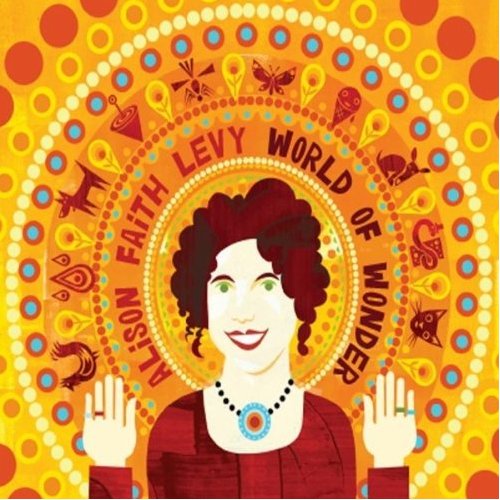
Briefly intruding on her busy schedule, we talked to Alison about her new solo album, World of Wonder.

Walk us through how you got to this point in your career. The Sippy Cups, then adult Americana music, and now back to kids’ music as a solo Sippy Cup.

The Sippy Cups kind of casually disbanded and parted ways. We were taking a break. We were touring a lot, it was very intense and we just need a break. Then I started this Americana band that I put out a record with. Then I started playing music for kids in the local bookstore, just very casually. I just started writing songs. I would wake up at 6 AM on the days I’d go to the bookstore and bam, I’d have a new song in my head that I’d want to write.

Soon enough, I had enough songs for an album and then I started to get bookings for shows at libraries and festivals. Then people were asking me to put out a CD so they could buy the songs. It just naturally evolved in to a full-fledged project. So I just called up my friend Allen (producer/Orange Peel Allen Clapp) to come in to the studio — let’s make a real record and have fun with it. Then of course, I went bananas on it and just went for it. It just wound up being such much more than I originally planned it to be — and I’m so happy with how it turned out.

Lots of kids’ music has a very simplistic feel to it. Yet on your record, it has very full, Phil Spector vibe to it.

The Sippy Cups were always about that big, full sound. We always wanted to write songs that kids could relate to, but make a record we wanted to hear. I think I did that on this record too. I don’t want to hold back just because it’s kids’ music. If I hear something musically that I think serves the song, I want to go for it. I’m willing to take some chances with the production. But I think kids can enjoy it; I think parents can enjoy it. It’s important for me to have the song sound the way I hear it in my head, which is a very full sound. And with Alan, I barely had a piano, vocals and guitar on the demos. He just  got it and we were able to run with it.

Was it difficult recording without other band members in the studio?

It was just the opposite — it was so easy. I love to collaborate, but I also love to see an idea through from start to finish. I do love the group discussion and being in a band is all part of that. Having six people in the room makes things move a little bit slower. The product can be amazing, but this was just a different process. It was kind of fun; there was never a debate. I could just have a good time with it.

Does the writing process between adult and kids’ music ever bleed across genres?

I’m always writing, but I tend to write on a project basis. Right now I’m completely immersed in the kids’ music. I’ve been around kids a lot lately, and they’ve inspired me. Although a couple weeks ago I did a gig with my Americana band and it was weird being up on stage as this bluesy momma. I kind of forget about that part of me.

Talk about the different joys between an adult show in a dive bar compared to a kids’ show at a library.

Don’t make me choose!  I honestly love them both so much. They’re both completely different, but I enjoy each for different things. I get such a joy from connecting with the audience. Whether I’m belting out the blues with this super loud, kick ass roadhouse band or if I’m jumping up and down with a bunch of three-year-olds, I get the same joy. Even though it’s completely different music, I get the same adrenaline rush when I’m performing. When the crowd responds, it just puts a smile on my face.

Since it’s a solo record, did you feel you had less expectations on this album?

A little bit, but I always worry that I might be pushing too far with the record. You know with the lyrics,  it’s always intended for kids, but there are some pretty sophisticated moments where I worry that I might have gone too far. Ultimately, I have to go with my heart and what I feel and how I should convey the song. You know there is a simple song like “Baby Anteater” and then there’s “Eye Of The Tornado,” which is about emotions and chaos and about finding a peaceful place amongst the chaos. I was hoping that it would give a nice message to  kids, but it’s a sophisticated idea. There would be times I would look at Allen as ask “Am I going too far?” and he would tell me “No, just do what feels right. You’re communicating.”

How do some of your Americana musical peers  perceive your kids music?

I think they don’t quite get it. They think it’s cool that I do it, but it’s every alien to them. They’re super supportive. Some have heard the record  and love it, but they don’t quite understand it. I try and get them to come to shows so they can see what it is all about.

It’s very difficult to make financial headway in the kids’ music scene. So why do it?

I’ve never made an album thinking about whether I could make a profit on it. What’s good about kids’ music is there are lots of opportunities to perform that actually pay pretty decently. That’s a nice alternative to playing adult music in a smoky bar with a tiny guarantee. With kids’ music there is at least a level of performance income that you can earn. Having a CD out also helps my profile. Obviously, I would hope to at least be able to break even on the record. Ultimately, I made it because I wanted to make a record. I hope people enjoy it — and that’s the most important thing to me.

Alison Faith Levy’s World of Wonder is out now. Buy your copy here.