Category Archives: Featured

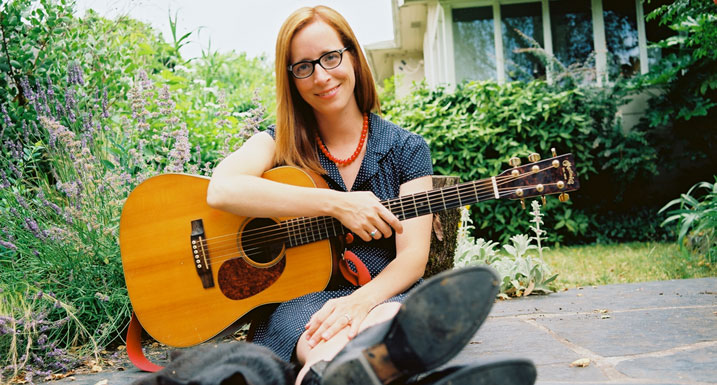
Laura Veirs

A Conversation with Laura Veirs

Laura Veirs

Photo by Alicia J Rose

The family entertainment market is so saturated with artists venturing over from the “grown-up” music world that I’m not sure there’s any such thing as an unexpected candidate for a kindie record anymore — but having said that, I have to confess I raised my eyebrows when I found out about Tumble Bee: Laura Veirs Sings Folk Songs for Children.

Part of the young, Pitchfork-approved crop of neo-folk artists who have helped breathe fresh life into the traditional music scene over the last decade, Laura Veirs is actually a perfect fit for a record like Tumble Bee, which sits public domain favorites like “King Kong Kitchie Kitchie Ki-Me-O” and “Jack Can I Ride” alongside newer family-friendly numbers like “Jamaica Farewell” and “All the Pretty Little Horses.” The warm fragility of Veirs’ voice has often acted as a softening agent in albums like Year of Meteors, which add icy textures and hard angles to folk forms, but here, it’s cut from the same weathered cloth as the music.

I love Tumble Bee, in other words, and I think your kids will too. Veirs offered her perspective on the album during our recent conversation — here’s what we talked about.

One of the big differences between the kindie scene and the broader pop marketplace is the way covers albums are received. Outside this little bubble, they’re usually something an artist does to fill out a contract or kill time between new material, but it’s still a really vital tradition for family artists.

You know, I can tell there’s a stigma attached to this record already, with friends of mine who don’t have children. Their eyes will glaze over and they’ll be like, “What else is going on?” There’s definitely a divide there. And in doing our research for this, I felt the bar…you know, there’s mediocre music everywhere, in every style, but I think the bar is often set lower for children’s music. Or it’s just aimed at really young children, so it isn’t as interesting to adults. In fact, it can be annoying.

So I’d say those friends are probably thinking I went and made one of those goo-goo, ga-ga records, but I didn’t. I wanted to make something parents could enjoy with their children — or without them, really, but maybe that’s too much to ask. It’s really more of a covers record than a kids’ record. I think a song like “Prairie Lullaby” is strong enough to capture anyone’s attention.

We tried to do these songs in our own way, but we realized some of them have been around for 500 years. I can see how some people would say, “Oh, I’ve heard this.” But not all of them — some songs were technically traditional, but we found them in places like Peggy Seeger’s Animal Folksongs for Children — so we were familiar with the words, but had maybe never heard them in those arrangements. Just from a folklore perspective, doing that research was a lot of fun.

You’ve been pretty prolific as a songwriter so far. What made you want to take this detour into covers now?

Well, I have an 18-month-old, and when I was pregnant I toured with him — both in the womb, and after he’d been born. So after that was done, I felt like I needed to catch up on sleep [laughs], and I’d also made the choice to cut back to part-time music. I’d block out four-hour days in the backyard studio, and that’s how we made this album — four hours at a time, which took awhile.

So there was that reason. I felt like I’d just created this human being, and toured my ass off, and I needed to recover myself in some way and just relax with music. I enjoy songwriting, but in some ways, it’s much harder work. I didn’t feel like I quite had the juice for that.

You spent some time in China when you were younger. Did that affect your relationship with American folk music at all?

Well, that was a long time ago, and although I was obsessed with learning Chinese, I never really became enmeshed in the culture, so to speak. If anything, I think it was more a question of having a lot of Buddhists in my family, and I’m not a religious person, per se, but there’s something about that philosophy that appeals to me as a musician. I like music that has a lot of space, and that toys with the fantastical surrealist aspects of life, and I think there are interesting parallels there.

If being outside the U.S. has affected my relationship with American music, I think it’s probably happened because I’ve toured Europe a lot — I’ve really dedicated a lot of time over there, and gotten a lot of really positive feedback because of it. I hear their perspective on America while I’m there, and how a lot of them are horrified by things like healthcare, the military, the school system — but they’re fascinated by our music, and our overall culture. And they should be, because it’s awesome. African-American rhythms, Irish melodies, the birth of rock ‘n’ roll — they don’t have that melting pot.

And we also have these vast wildernesses, these huge untouched tracts of land. I grew up doing a lot of camping with my family, and I think that has probably had a bigger influence on my music, as well as my lyrics.

What was your research process like when it came time to decide which songs you were going to cover on the album?

We listened to the whole Harry Smith folk anthology, which we’d done before, but never with something like this in mind. We listened to a lot of Neil Young, which didn’t make it onto the record, as well as a lot of friends of ours — like Karl Blau, who wrote the title track. Harry Belafonte was a biggie, as well as Peggy Seeger, Woody Guthrie, Pete Seeger…you know. My husband has a ton of albums — he’s obsessed. Sometimes I felt overwhelmed, so he did the bulk of the searching.

You did a stint on a major label (Nonesuch), and now you’re releasing albums independently again. Is Tumble Bee part of an overall plan, or are you just taking things as they come?

I run my label with my friend now, which has been great. I mean, I’m so grateful to Nonesuch for giving me a springboard into bigger budgets and real promotion, because I had no audience in this country when I signed with them. But financially speaking, it’s much better to have my own label. It was a risk — it might not have worked out that way, but it has.

We’re just going to run this label, hopefully put out some other artists’ music, and I’ll make another album. I’m working on that now. I may make another record for kids at some point — I think it’s been super fun, stigmas aside. Hopefully, I can add to the perception that this kind of thing can be as artistic and valuable as any other kind of album.
A Conversation with Chip Taylor

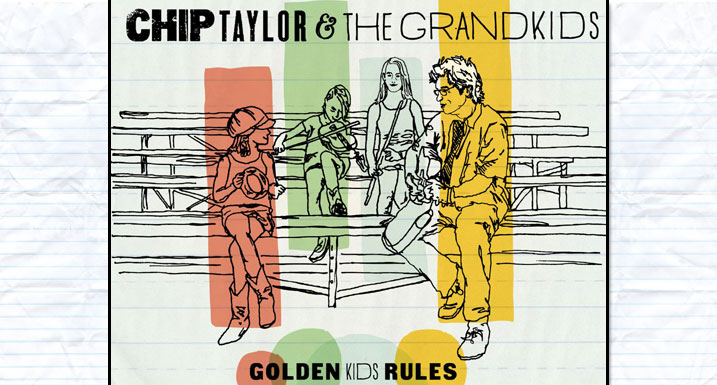
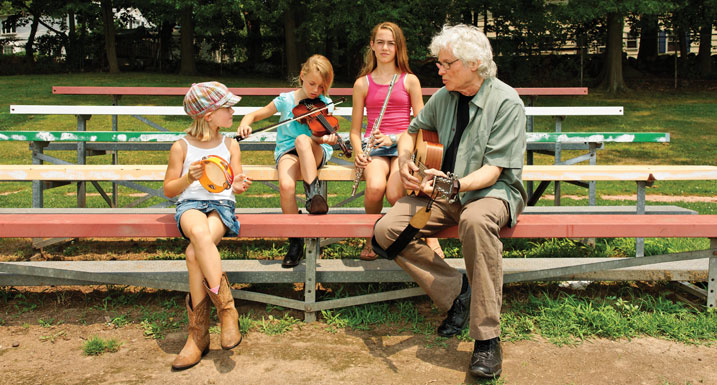
Chip Taylor and the Grandkids

Smithsonian Folkways Music

You may not know Chip Taylor by name, but you’ve certainly heard his work. As the writer behind a tall stack of hits for a list of artists that includes Willie Nelson, Bobby Fuller, Emmylou Harris, and Waylon Jennings — not to mention “Angel in the Morning” and the stone-cold classic “Wild Thing” — Taylor has been part of rock’s DNA almost from the beginning. Now he’s moving on to a new phase of his career, as the frontman for Chip Taylor & the Grandkids.

The project is exactly what it sounds like: Taylor, guitar in hand, fronting his three grandkids. It’s an adorable idea, but it’s also a pretty terrific album, grounded in Taylor’s trademark earthy (or, as he might put it, “sweaty”) aesthetic while still filled with all the carefree whimsy and lovely harmonies any kindie fan could hope for. Golden Kids Rules is out today, and you need to hear it — but first, read Taylor’s thoughts on the album and his long, storied career.


This is a really enjoyable album, and it’s also a really beautiful idea — in theory, anyway. I imagine there must have been a few moments when trying to make a record with small children seemed like more trouble than it was worth.

[Laughs] The whole thing was totally a labor love. The whole idea at the start was to surprise their uncle for his wedding, so I wrote a couple of songs and talked to the kids, and they seemed really excited. But yeah, it’s hard to get the three of them to focus on something for an extended period of time. It wasn’t easy, but they always liked the results. It was never one of those things where they didn’t want to do it again, but it was funny watching their attention wander all over the place.

And, you know, I’m the grandfather, but this wasn’t like just going out in the field and having fun; there were times when we had to buckle down. And little Sam, for instance, would pout and not want to sing, so I’d have to sit down with her and say “If I go in there with you, will you do it?”

We did our first big performance at the Smithsonian Folkways Festival a few months ago. We’d been rehearsing, but we hadn’t performed for anyone, and every week I’d go up there for an hour to work with them. You just never know what you’re going to get with kids. [Chuckles] One comes in and she can’t hardly move, she just wants to lay on the couch. I just love them so much, and they like working with me, so that makes it easier. The good thing I did, I think, is that when I rehearsed with them, I’d get everyone in their spot and I’d pretend my band was with me, playing. I’d talk to them — “John, will you pay attention back there? Tony, let’s go. One, two…” I’d get them going like that, so the kids would get the feel.

It was good, because when we did the festival, we ended up not being able to do a soundcheck. Right beforehand, I’d told the kids, “You’re each going to have your own microphone, and you have to soundcheck on it. You do it like this — ‘testing, one, two, three; testing, one, two’…you’ll have to tell us whether you’re hearing enough of your own voice.” Then when we got up there, they only gave us five minutes to set up, and all these people were in the audience — the place was packed — and we got up on the stage, I counted off with the band, and one of the girls walked up to her mic and said, “Testing, one, two…” [Laughs]

So I told the audience, “We’re just going to do a little part of one song here — this isn’t really part of the performance yet.” So we did our little warmup, and when it was over, all the people started cheering. That was it. The girls were like, “Oh, this is what it’s all about.”

But the whole thing of working with the kids — that’s part of the fun of it. It’s never perfect. You’ve got three kids with three different personalities, and they’re all thinking about different things. Underneath it all, they all want it to be good, but it’s about working through that, and working through your own emotions. That’s the fun of it. And it’s fun to hear them talk about what their problems are: “Okay, Kate, why do you have to lie on the sofa all day today?”

“Well, Peepaw, this is what I did today…”

“Well, you have to get through that, my dear.” It’s that wonderful back-and-forth where you have to work things out together.

I know you’ve said you didn’t come from a musical family, and I know that — at least according to some of what you’ve said in other interviews — you originally didn’t even intend to be a musician.

Well, what it was — I didn’t come from a musical family, at least insofar as my mom and dad didn’t play any instruments. But they loved the arts. We loved going to movies, listening to singers like Bing Crosby and stuff like that. So it was floating around the house, but what really got me going was when my parents took me to a musical in New York — My Wild Irish Rose. I didn’t want to go, but they couldn’t find a babysitter — I was seven or eight years old. All I remember feeling is that when I heard the music start — heard that orchestra start, right up against it, watching those people create that sound — I got a real buzz. It was like when you fall in love for the first time and you don’t want anyone interrupting your feeling. That was it. We had an hourlong drive back home, and I didn’t want my parents to talk. I just wanted to keep feeling that feeling, and I knew I wanted that to be my life. That’s always been a part of me, and all of my career decisions have been based on that feeling.

That’s what it was like for me when I discovered country music for the first time. You know, it was the sadness that I liked. The warm thing that…the pedal steel playing, you know? I never liked that clicky, poppy stuff. On this record with the kids, we did a song called “Quarter Moon Shining,” and that carries some of that tone. Same with “Magical Horse.” It’s got an honest kind of thing to it. That’s the way I talk to the kids about music, and they love it.

Do you see some of that ambition starting to take root in your grandchildren?

You know, these days, there are so many things kids do. Every minute of the day, they have some activity that they’re going to, and they usually like all of them, but I don’t know if they have enough time to think about what they really want to do. I don’t know that they know that yet, and I don’t know that they’re given a chance to know. Their lives are so filled.

It’s all healthy — swimming, basketball, soccer, band, and all that good stuff. But do they love one more than another? I don’t know. They sure do love performing, though. They love the applause, and the idea that they sounded good.

You’ve seen the best and the worst of the music industry, and you got started at a relatively young age. Is there a limit to how big you’re willing to let this project get?

I don’t have concerns about it. I see such beautiful things in these kids, and they aren’t spoiled by this kind of attention. I’m not worried. Every once in awhile, my wife or the kids’ mother will say something to the effect of, “I don’t want them to grow up like so-and-so young star,” but I can’t see that happening. I know we want to keep doing it. Lately, whenever we’re together, singing or just kind of fooling around, when something silly happens I’ll start writing a song about it. I’ll start to sing, but I’ll leave lines open for one of them to add something, and before you know it, we’ll have a song. They love doing that, and if we get the chance to make another album after this one, it’ll include more co-writing. What a wonderful thing that is.

I think for a lot of artists, it might be frustrating to be so identified with one of your earliest, simplest songs…

You’re talking about “Wild Thing.”

Right. But you seem to have used that simplicity as a lesson, particularly on this album.

Well, I’m a simple guy. [Laughter] When I was younger, the songs I liked the most were the ones that just got to the heart of things. I never liked clever ones at all. Anything that sounds too worked-on, I don’t like. The early country singers, and guys like Elvis — they were just singing with real emotion. So when I started writing, you know, my first hits were for Willie Nelson, Eddy Arnold, the Brown Family, and Waylon — I wrote for people like that before I started rockin’. “Angel of the Morning” might have a few more chords in it, but it has a very honest movement. It just goes where it goes. I felt a chill when I wrote it — it was just a feeling.

And that’s “Wild Thing” — it’s just a feeling on tape. And you can play it anywhere. I remember being in this little town right above Milan, sitting near this mother and her two young kids, and I started playing that groove — the kids were bouncing back and forth. Looking at me and grooving. There’s a magic to that. I never look at it as a lesser song — it’s one of my most powerful songs.

Those chords are elemental. Putting them together must have felt like discovering fire.

It’s the way the strum goes. It’s a sweaty kind of thing — I like sweaty songs. To me, that’s one of the better ones. I loved all those covers of it. Jimi Hendrix totally got it.

It’s a song that has everything it needs, and nothing more — and I think being hardwired into music at that fundamental level might make you uniquely qualified to record music for kids.

To me, all great music is about feeling. It comes from me as the writer, but it also comes from the people you’re performing with — and for me, that’s the beauty of this album, is coming together with the energy of the kids. That’s what this represents. Their performances are wonderful, and the musicians who worked with us aren’t playing down to kids — these are soulful players, and they’re just playing songs.


A Conversation with Alastair Moock

Alastair Moock

Photo: Mara Brod

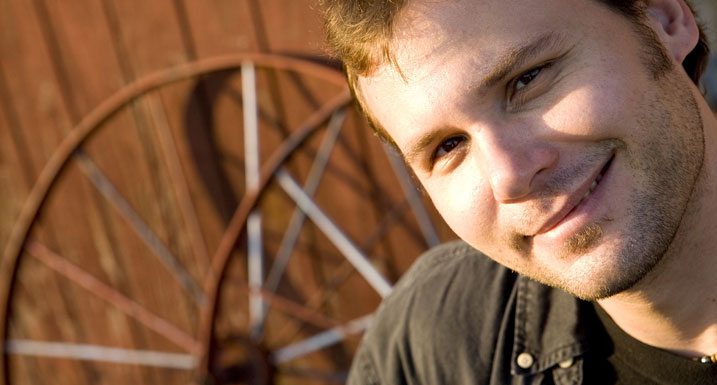
This week heralds the return of Boston folk veteran Alastair Moock, whose debut kindie record, A Cow Says Moock, earned a slew of awards and rave reviews. Alastair’s follow-up, These Are My Friends, expands upon the promise of its predecessor, weaving a parade of special guests (including Rani Arbo, Kris Delmhorst, and Anand Nayak) through a collection of vibrant originals and judiciously chosen covers. As we discussed in the following interview, Alastair’s musical tradition includes everything from Sesame Street to Woody Guthrie and Ray Charles, and they’re all well represented here. No, seriously: These Are My Friends includes a Sesame Street favorite (“Ladybugs’ Picnic”), a page from the Guthrie songbook (“Mail Myself to You”), and a Ray Charles classic (“Yes Indeed”).

Sounds like a great combination, doesn’t it? It’s just the latest step in a career that has found Moock tilling rich musical traditions while remaining happily under the radar. Of course, if These Are My Friends turns him into a global kindie phenomenon, we don’t think Alastair will mind…


The last time I saw you was at the Meltdown a couple of years ago, and you were playing alone with an acoustic guitar in what was basically a hallway.

That’s right — that was just after the release of my first kids’ music album. I’ll be back there next year, but with a band this time.

I was just about to say, you’ve come a distance since then.

Yeah, that show was a last-minute thing. Bill Childs was kind enough to ask me to come out, and I was happy to do it, but…for sure, things have progressed for me in the kids’ music world. I’ve been making music for 15 or 20 years in the folk world, so I’m certainly not new to this, but family music was, in a lot of ways, like starting over. Not in musical terms — I think this stuff is part of the continuum of what I’ve always done — but the business is very different. The people who are running things are very different. The whole approach.

So on the business end, I have a booking agent now, and a publisher, and I feel like I understand this world much better this time around. I really enjoy it. I mean, the folk world is pretty genteel, all things considered [chuckles], but I think the people in kids’ music are even friendlier. Most of them seem to be in it for the right reason. I’m sure there are cutthroat elements out there, but especially in this indie circle I’m in, it’s a fairly small community. It’s really nice. It lets you feel like you can get your head around releasing an album.

On the new album, you used that “continuum” approach you described, partly through inviting guests who aren’t necessarily known for making family music, like Mark Erelli and Lori McKenna.

Yeah, and I was really excited to do that. I don’t know what it is about me, but community has always been kind of at the forefront to me. And I also really love taking on sort of the impresario role — of putting musicians in new places or combinations. It makes me excited that there are so many musicians that the audience maybe isn’t familiar with on the record. Where I am, the Boston area, it’s just choked with amazing talent everywhere I go. So I love that idea, and I also love making music with my friends, which is what this album was all about.

You mentioned the impresario approach, which is something I wanted to talk to you about. You put together the Pastures of Plenty concert series, which does exactly what you described in terms of bringing artists together in new combinations and contexts, which makes you sort of the Levon Helm of the Boston area.

[Chuckles] Well, yes. But there’s more than one of us. There are so many great musicians around here, and most of us don’t get a chance to hang out, because we’re usually playing at the same time. So anytime someone steps up and does something that can draw us all in, it’s exciting for everyone. But yeah, I started doing Pastures about 10 years ago — a little more now. It’s still going.

Let’s talk about the writing process for the new album. Do you have an overall approach to songwriting? Do you get up every day and punch in, or do you wait for inspiration to strike?

I don’t punch in. I wish I did. My wife is a fiction writer, and she’s far more disciplined than I am. No, I’m a very lazy writer, and I feel like the incentive I usually need is just the accumulation of a few songs that make me feel like I have an album in mind. Then I start getting excited, and start trying to fill in holes. I always try and approach a collection of songs as a collection of songs, so for me, a good album is one that has a lot of different elements.

And that’s reflected in These Are My Friends. It’s a nicely eclectic album, and although it’s identifiably part of the folk tradition, and none of it’s exactly what you’d call “produced,” you do incorporate a lot of interesting textures, sounds, and tempos.

It’s a little arcane now, because most people don’t listen to full-length albums — or listen to albums at all; they just download songs. But one of the nice things about the kids’ music world is that these albums are often given as gifts, and kids like to hold something in their hands. And once they have it, they want to listen to it over and over.

Which is the flip side, and sort of the awesome responsibility of being a kindie musician: you’re making music that parents often have to listen to repeatedly, so it’s important to sequence it as painlessly as possible.

Exactly, and that’s part of why I try to incorporate different sounds. People’s ears can’t take too much of the same thing. Especially kids’ ears — they need some rest. You can’t just hit them over the head with the same speed. And as far as writing goes, I’ve found it very freeing to work in the family music world. I have two audience members in my house, and they’re very attentive, honest listeners; they either get it or they walk out of the room, and I know I have to go back to the drawing board.

But humor has always been an element of my writing, and as an adult performer, I often didn’t know what to do with that. Woody Guthrie and John Prine are two of my heroes, and they did it successfully, but it’s a balance that I struggled with. I always had more fun writing the silly songs, and it seems to be a better fit with what kids enjoy listening to.

The humor in the music you’re talking about — the songs of Woody Guthrie, John Prine, or similar artists like Randy Newman and Loudon Wainwright III — is often most successful when it’s leavened with human drama, and I think that’s something you do on These Are My Friends. You know, a song like “Three Like Me” is funny, but it’s also poignant. There’s humor in the ways a three-year-old gets themselves into trouble, but you also flip the perspective: “how come people always yell at me?”

Yeah, it’s tough. And it isn’t really a conscious thing. Ultimately, you take in a lot as a listener, and then you start to put stuff out, hopefully in your own unique way, but it’s still a learning process. I don’t find humor that doesn’t have some sort of twinge of poignancy to be as valuable.

Was there a moment this time around when you knew you had an album?

I wrote “These Are My Friends” pretty early along, and once that happened, it sort of clicked. You know, as a father, I often feel like I’m more of a journalist than a songwriter, and that song is a good example, because my kids do have a lot of “friends” lying around the house. You know, nothing is in its original state. Curious George has to be wearing a purple hat. For a long time, my kids went through a string phase where they tied everything together, and we ended up with knots of toys and stuffed animals in these intricate webs.

But I love that. Their imagination is so raw, and that’s what that song is about. And as soon as I wrote it, I knew I had something, and I knew I wanted to involve my own friends, and that got me thinking about who I could involve. Like the song “Feets Up,” that Rani Arbo sings on, I had already been thinking of as a duet. That was something new for me this time around — thinking of writing for other people’s voices.

You cover a fair amount of traditional material on your albums. What’s your perspective on that as a songwriter? Is it difficult to line your own songs up with standards?

Sometimes it’s daunting. But it’s also really important to me. Almost all my adult albums have covers on them — a lot of Guthrie, Prine, and Dylan — and I did it because of the feeling that maybe there were people out there who hadn’t had the opportunity to hear those songs. People need to know them. This is our history. And with the kids’ albums, that feeling is even stronger. I mean, this is part of our heritage, and it’s so rich — I just have this educational urge to share it.

I actually have an educational project that I take into schools — it’s for older kids, third grade and above — where we look at how songs affected different social movements. How it keeps being reinterpreted and changed. I love thinking about that, and sharing it, and I feel like an album would be incomplete if it didn’t have those songs on it.

Most people who grow up to be professional musicians were once kids who were bitten by the musical bug at an early age, and now you’re playing to audiences with a lot of young people in them. What’s your perspective on your role in imparting that excitement — that love of music?

The most important question to me is whether or not I can reach the kids out there that will discover that love. If I can set that spark off in kids, where they not only think music is really cool, but realize it’s something they can make themselves rather than just turning on the radio or an iPod…it makes me really happy that my kids love to make up songs. And I don’t think they’re that unusual — I think most people do that, and it’s something they just shut down at some point.

Everyone reaches that sort of self-conscious adolescent stage. And you hope they can come out the other side and realize they can make their own art, whether it’s at home for their family or out at open mic nights, or even trying to make a career out of it. Those are all beautiful things.

Before I started making kids’ music, I was out of touch with the whole scene, and I had been since I was a kid myself in the ’70s. So it was exciting, and gratifying, to find artists like Dan Zanes and Elizabeth Mitchell — people who were tapping into these roots we share, and expressing the ideals of someone like Pete Seeger. Like Pete said, you can be a musician yourself, you can be an activist yourself — there’s no line between the citizen and the professional. And my urge to share those traditions comes back to that — to the knowledge that there was a time when there wasn’t such a separation between making art and just being a regular person. It’s wonderful that there are so many artists out there showing that to kids. Not preaching it to them — showing them.