
Category Archives: Dads Writing About Kindie Culture

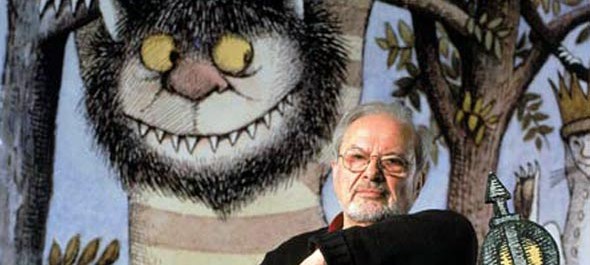
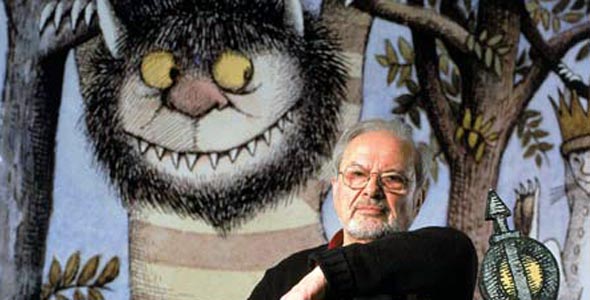
Maurice Sendak

He Saw It, He Loved It, He Ate It: Maurice Sendak, 1928-2012

Maurice Sendak

PBS

“There are so many beautiful things in the world which I will have to leave when I die, but I’m ready, I’m ready, I’m ready.” —Maurice Sendak

We spend an awful lot of time and money trying to keep them entertained, but we can be dismayingly clueless about the range and depth of our children’s emotions, not to mention their capacity for absorbing and understanding difficult subject matter. There’s an ongoing battle to sanitize children’s entertainment, and the sanitizers are winning — I think most new parents have experienced the shock of reading a classic book or watching an old movie with their kids, only to realize that family entertainment used to be a lot more open about things like cruelty, violence, and death.

It’s easy to understand the impulse to protect our children from these things, but they’re part of life, and as much as I struggle with exposing my own kids to the darkness, I try to balance those protective impulses against the knowledge that by the time I think they’re ready, they’ll probably already have been exposed to whatever I’m worried about — and probably without my knowledge or input.

Award-winning author, illustrator, and noted curmudgeon Maurice Sendak, who passed away today at the age of 83, understood the value of darkness better than most, and to his immense credit, he fought the growing frenzy for “safe” kids’ media throughout his brilliant career. (Right up ’til the end, in fact: his last book, 2011’s Bumble-Ardy, elicited delicious gasps of horror from overly sensitive parents’ groups and critics.)

Time and again, Sendak’s books sent would-be censors into a tizzy, from the uproar over his classic Where the Wild Things Are (repeated years later, when Spike Jonze’s film adaptation was deemed inappropriate for children) to periodic rows with prudish adults like the librarian who used white-out to cover Mickey’s exposed penis in The Night Garden.

Sendak’s retort to that particular indignity was a letter that contained the priceless quote “It is only adults who ever feel threatened,” which is a pretty outstanding manifesto for his career. He became the world’s preeminent children’s author not because he had tremendous insight or singular artistic talent, although both of those things are true. He built his reputation on honesty. In a medium that prizes sentiment over emotion and platitudes over truth, he refused to ignore the reality of childhood — that as much as we might wish it weren’t, it’s often a very difficult time.

With books like Where the Wild Things Are, Sendak gave power to children by acknowledging the roiling, unpredictable frustrations of youth. What some saw as inappropriate was really just the truth — he was kind of like a kidlit gangsta rapper, in a way. And despite his reputation for being something of a crank, he understood his role and took it seriously. I love this quote from his interview with NPR’s Terry Gross, who asked him to share some his favorite reader’s comments:

I answer all my children’s letters — sometimes hastily — but this one I lingered over. I sent him a postcard and I drew a picture of a Wild Thing on it. I wrote, “Dear Jim, I loved your card.” Then I got a letter back from his mother and she said, “Jim loved your card so much he ate it.” That to me was one of the highest compliments I’ve ever received. He didn’t care that it was an original drawing or anything. He saw it, he loved it, he ate it.

I think all the best children’s art reaches for that level of simple, irascible truth, and even though examples of it seem to be increasingly crowded out by brightly colored, bubble-wrapped product, Sendak’s enduring legacy (and the countless tributes written in his honor) serve as a reminder of how much we, and our kids, need artists who are willing to expend the effort. Morals, hearts, and rainbows can make us feel good, but I think it takes a pricklier type of tale to teach us something about ourselves — or to help us accept ourselves. Maurice Sendak excelled at that, and that, as much as anything else, is why we’ll miss him so much — and it’s what I’ll try to remember the next time I’m tempted to lunge for the remote or skip over a potentially troublesome passage in a book.
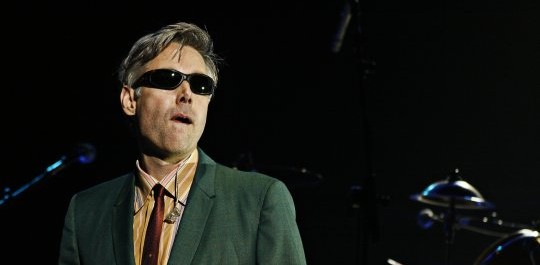
Too Sweet to Be Sour, Too Nice to Be Mean: Adam Yauch, 1964-2012


(video courtesy of MC Mike Rachap over at Readeez)

On the last Popdose podcast, my co-hosts and I got together to praise the life and legacy of Levon Helm, and perhaps inevitably, a large part of the discussion centered on authenticity; from Music from Big Pink to Electric Dirt, Helm always seemed to live and create on his own terms. It often got him into trouble, but he triumphed so often — over changing trends, bankruptcy, and ill health — that his death, even coming at age 71 and after years of struggling with cancer, hit us in the gut. We thought he’d beaten his demons because we wanted him to. We saw something of ourselves in him. His mortality reflects our own.

My thoughts returned to that conversation after I heard the news of Adam Yauch’s passing today. Like Helm, Yauch had battled cancer for years — and again, we wanted to believe he’d beaten the disease. For my generation, this one hits even harder, because the Beastie Boys belonged to us. They broke through with Licensed to Ill the summer I turned 13, topping the charts and going platinum by reveling in exactly the sort of sniggering, hormone-addled stupidity that my peers and I understood.

Some of us were the same kids who’d turned Thriller into a record-setting smash, but I think Ill meant more to us. Unlike Michael, the Beasties seemed to burst, fully-formed, out of nowhere, at just the right moment to help us wield our inner wiffle ball bats through the horror of adolescence. The tools they gave us were blunt, and occasionally cruel, but they were effective; we wanted girls, and we were ready to fight for our right to party. I didn’t have any particular love for hip-hop — hell, I was a Billy Joel fan — but I stole a copy of Ill from the local Wherehouse anyway. Slipped it into the pocket of my Bugle Boys.

It could have ended there for the Beastie Boys, and a lot of people really thought it would; there were real sparks of talent on the album, but a lot of them were smothered with the sort of bigoted, misogynistic, frat-boy lunacy that some people hated about the group even then, and that kind of thing just isn’t very funny for very long. (Ask Andrew “Dice” Clay’s booking agent.)

I probably don’t need to go too far into what happened next. The upshot is this: the Beasties were always on to the next thing, sometimes the next next thing, never showing much regard for what people expected from them, and occasionally paying the price in sales. As big as they were, they probably could have been even bigger — for awhile, anyway — if they’d played the charts instead of always trying to grow.

MCA, Ad-Rock, and Mike D. were older than the kids in my generation, but not by much. They were kind of like cooler older brothers, perpetually away at college, periodically sending back bits and pieces of the stuff we should be listening to instead of all that baby crap on the radio. They saw it all before we did, from the music — frat rap with a Marshall stack, weed-scented samples, ’70s kitsch — to more important stuff, like growing from a horny teenager into a man with the courage to work for the causes that mean something to you.

They were authentic, in other words. And as with Levon, I think that’s what people really responded to. I bought every new Beasties record out of sheer excitement to hear what came next, even though I knew I probably wouldn’t warm up to it right away. I just wanted to know what they were going to do. For me and a lot of others, I think their continued vitality reflected the possibility of our own: Gray-haired guys who should have been past their prime, still trying to dig deeper into a musical genre that floats on young male machismo. If they could do it, maybe there was still hope for us.

Which is why Yauch’s death hits so hard, and why your Facebook and Twitter feed is probably full of social media-sized eulogies, and why I’m adding my own. I’m posting it here at Dadnabbit, instead of Popdose or somewhere else, because I think the way Yauch lived his public life offers a sort of object lesson for us as parents — his continued authenticity in the face of an industry, and a culture, really, that so often seeks to seduce it away from you. Any creative person who’s tasted any sort of success can tell you it’s a brain-scrambling experience, and it’s very easy to lose sight of who you really are when you know people are actively expecting you to be…anything.

It isn’t too much of a stretch to say that parenthood is the same way, is it? I don’t think so. And while there are plenty of Beastie Boys songs I’m not in any hurry to play for my kids (although they do giggle mighty hard at “Brass Monkey” and “Shake Your Rump” — thanks again, Readeez), once they’re older, you can bet that will change. Partly for reasons of nostalgia, of course (hey, I’m still just a child of the ’80s), but also because I think we can never have enough examples of people who are brave enough to grow, and confound expectations, and achieve success on their own terms. Yauch died far too young, but he left behind several lifetimes’ worth of art and a handful of timeless lessons. Thanks for everything, MCA.

Adam Sandler Plans Inevitably Fart-Filled ‘Heroes for My Son’ Movie

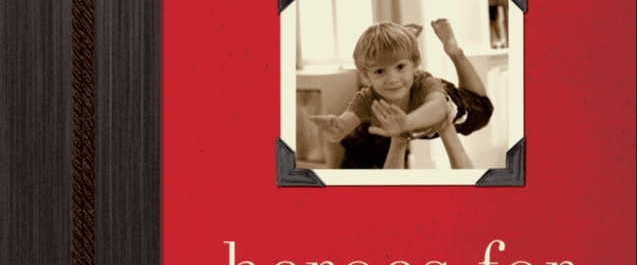
Brad Meltzer is a solid writer and a really fascinating guy, and his nonfiction bestseller Heroes for My Son (followed more recently by Heroes for My Daughter) is a truly beautiful, heartfelt expression of a father’s deep love and boundless hope for his child. So it makes perfect Hollywood sense that there’s a movie adaptation in the works — and that Adam Sandler is producing it.

I don’t have any particular axe to grind with Sandler, although I suspect that’s because, in spite of my line of work, I’ve been able to avoid most of his worst films — I don’t think I’ve seen one since Spanglish, which I kind of liked, unlike most of the critics who wrote it up. But a movie hardly needs to be made from this book, and Sandler hardly seems like the guy to make it.

It isn’t that Heroes for My Son is a towering work of literary genius, and I’m not arguing that it’s without a certain measure of dewy-eyed New Age dippiness. But Meltzer wrote it from a place of tenderness, good humor, and unconditional love, and if there is a guy in Hollywood who can translate that to the screen without tipping into mawkishness, I don’t think it’s Sandler.

buy lasix online buy lasix no prescription

Why does it matter? Because there aren’t enough movies about good relationships between fathers and sons — about the pride we feel for our children, the dreams we have for them, the endless, complicated struggle to show them how to be kind and strong and honest and true. I’m not sure what fart jokes, Rob Schneider cameos, and syrupy third acts have to do with any of that.

buy stromectol online buy stromectol no prescription

Of course, all that stuff sells tickets, which is why Sandler has enough money to go around optioning movie rights to bestselling books, and I don’t begrudge him any of that. This is just another example of Hollywood doing what it does — I only wish they’d done it a little differently in this case.

buy lexapro online buy lexapro no prescription